



Newcomer's Guide to Interpreting Laboratory Balance Parameters
 Jun 12, 2025|
 View:2691
In daily laboratory work, every step from accurately weighing chemical reagents to preparing standard solutions relies on precise mass measurement. The electronic balance for laboratory is the core tool to achieve this precision. However, faced with a wide range of products and complex parameter tables, beginners are often confused: What do these technical specifications really mean? How can I determine which balance truly meets my experimental needs? Understanding Laboratory Balance Specifications is the first step in making an informed choice. This guide simplifies the complexity and helps you understand the key parameters.

Understanding the Basics: Accuracy & Capacity
Maximum Capacity
This refers to the maximum weight that an electronic balance can safely and accurately measure. When selecting a balance, ensure that the maximum weight of the samples you routinely need to weigh (including containers) is below the balance's maximum capacity, and leave a certain safety margin (it is generally recommended not to exceed 80% of the maximum capacity). Overloading can permanently damage the sensor.
Readability
This is the smallest weight unit that can be displayed on the electronic balance's screen, typically expressed in grams (g), milligrams (mg), or even micrograms (µg). For example, 0.001g (1mg) or 0.0001g (0.1mg).
Key Point: Readability directly reflects the balance's minimum precision, determining how small a weight difference you can distinguish. High readability (such as 0.1mg or 0.01mg) is crucial when weighing trace samples (e.g., expensive reagents or active ingredients). However, the higher the readability, the more sensitive the balance is usually to the environment (airflow, vibration), and the higher the cost.
Core Performance: Stability & Reliability
Repeatability / Precision
This refers to the consistency (closeness) of results obtained from multiple weighings of the same object under the same measurement conditions (same position, same sample, same operator), usually expressed by standard deviation (SD) or the maximum-minimum difference.
Why It Matters: Excellent repeatability is the cornerstone of an electronic balance's reliability. It indicates whether the balance can stably provide reproducible results in your laboratory's actual operating environment. This is one of the most fundamental and important parameters for evaluating balance performance.
Linearity Error
This refers to the maximum deviation between the measured value and the true value of an electronic balance across its entire measurement range. Ideally, the error should be small and consistent whether weighing 100g or 10g.
Key Point: Linearity error reflects the balance's accuracy at different weight points. A balance with good linearity provides more trustworthy measurements at all points within its range, which is particularly important for applications requiring precise weighing across different ranges.
Environmental Factors & Features
Sensitivity & Draft Shield
High-precision electronic balances (especially those with a readability ≤0.1mg) are extremely sensitive to air currents. A draft shield is an essential accessory, effectively isolating air flow, dust, and electrostatic interference to ensure rapid and stable readings. Choose a draft shield with good sealing and easy operation.
Calibration
Internal Calibration (IC): The balance has a built-in calibration weight and can be calibrated according to a preset program (manual or automatic), which is convenient and reduces external interference, especially suitable for clean environments or scenarios requiring frequent calibration.
External Calibration (EC): Requires manual calibration using external standard weights of known precise mass. It is relatively low-cost but slightly more cumbersome to operate, and requires ensuring the accuracy and proper storage of the weights.
Key Point: Regular calibration is a necessary step to ensure the long-term accuracy of an electronic balance. Understand the balance's supported calibration methods and develop a calibration plan.
Stabilization Time
This refers to the time required for the electronic balance to display a stable reading after placing a sample. For laboratories handling a large number of samples, fast stabilization time can significantly improve work efficiency.
Practical Selection & Operation Tips
Define Your Needs
Sample weight range: What are the lightest and heaviest samples? Determine the required minimum readability and maximum capacity.
Application type: Is it for routine weighing (powders, liquids), or does it need to comply with specific regulations (e.g., GMP, GLP)? Is there a need to weigh volatile/electrostatic samples?
Laboratory environment: Is the workbench stable? Are there obvious air currents or vibrations? Are there large fluctuations in temperature and humidity?
Proper Use & Maintenance
Level adjustment: Ensure the electronic balance is level before use (check the built-in spirit level), as misalignment can affect accuracy.
Warm-up: High-precision balances should be fully warmed up before use (refer to the manual, typically 30 minutes or more) to allow internal components to reach a stable operating temperature.
Cleaning: Keep the weighing pan and the inside of the draft shield clean. Use a soft brush or specialized cleaning tools, and avoid corrosive solvents. Prevent samples from spilling directly.
Regular calibration and verification: Strictly follow the manufacturer's recommendations and laboratory SOPs for calibration and intermediate checks.
Choose a Trustworthy Laboratory Partner
Understanding Laboratory Balance Specifications is key to selecting an electronic balance for laboratory that meets experimental requirements, offers reliable performance, and is durable. From readability (determining precision) and repeatability to internal calibration and draft shields (ensuring convenient operation), every parameter directly impacts your experimental data and efficiency.
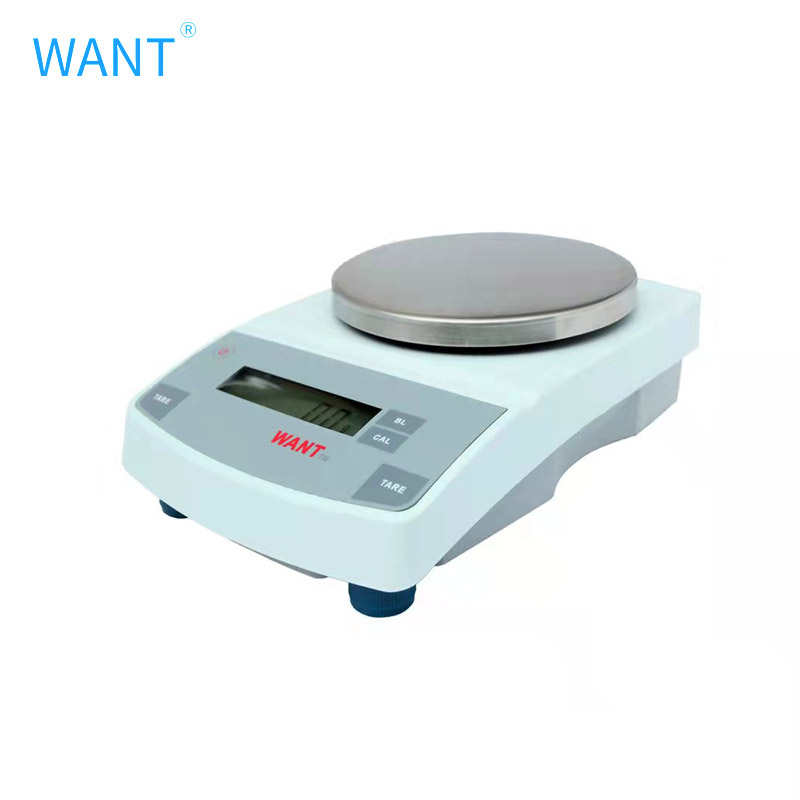
As a professional electronic balance supplier, WANT understands the importance of precise measurement for scientific research and quality control. We offer a wide range of high-performance laboratory electronic balances, from economical models for basic teaching and routine testing to high-precision analytical balances for cutting-edge research and strict regulatory environments. WANT balances are known for stable performance, reliable quality, and user-friendly design. Strict production processes and quality control ensure that every balance meets its specified precision standards.
Equip your laboratory with precise and reliable weighing tools—WANT is your ideal choice. Our professional team not only provides high-quality products but also comprehensive pre-sales consulting and after-sales services to help you select the most suitable electronic balance and ensure its long-term optimal performance. Contact WANT today to start your journey of precise measurement!