


How to Buy Electronic Balances from a Chinese Manufacturer: An OEM/ODM Sourcing Guide
 Nov 12, 2026|
 View:12
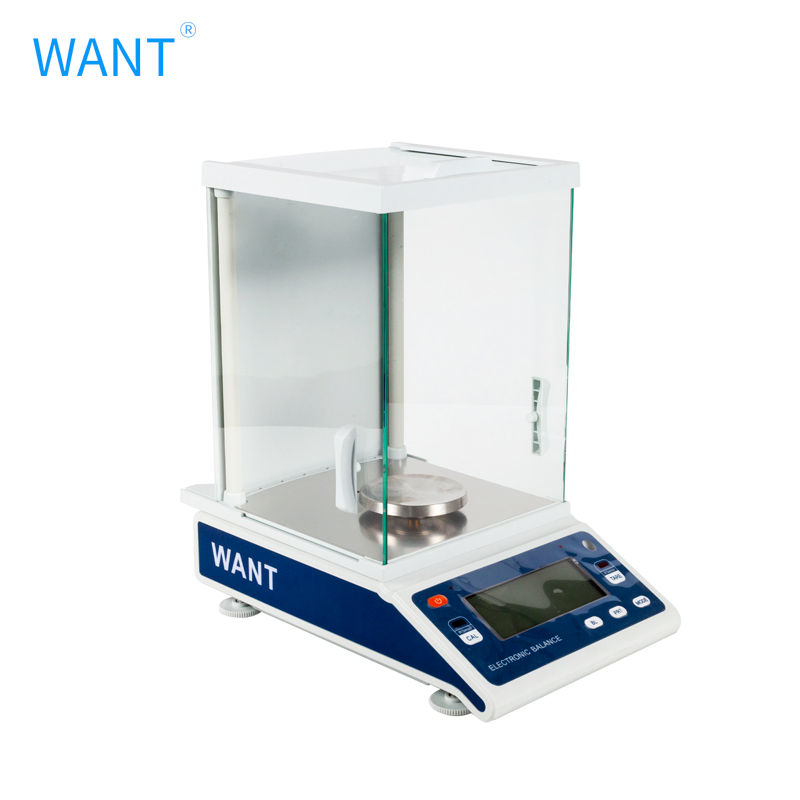
This guide is written from inside a factory. WANT Balance Instrument Co., Ltd. has manufactured electronic balances in Changzhou, Jiangsu since 2006, produces more than 20 product series, and builds OEM balances for internationally known scale brands sold in over 160 countries and regions. Everything below reflects how those orders actually run — including the parts buyers usually discover too late.
Manufacturer, Trader, or a Website in Between?
The first filter in sourcing from China is not price or specification — it is establishing who you are talking to. A "supplier" listing balances on a B2B marketplace may be a factory, a trading company, or an individual reselling from both. Each is workable, but you must know which one you have, because it changes who controls quality, tooling and warranty.
Table 1 — How to tell a balance factory from a trading company
| Check | What a Real Factory Shows | What Should Make You Look Closer |
|---|---|---|
| Business licence & customs registration | Registered scope includes manufacturing; holds import/export rights and a customs code (for example, WANT's is 3204964107) | Licence scope is "trading" or "wholesale" only; unwilling to share the registration number |
| Sensor source | States plainly whether load cells and electromagnetic force sensors are made in-house or bought from named suppliers | Vague answers; claims every sensor is "imported" with no supplier detail |
| Capacity evidence | Quotes per-model monthly output (for example, WANT's WT-CF 0.01g balance line runs about 3,000 pcs/month) and can name current OEM customers' markets | Cannot state output for the specific model you asked about |
| Standards work | Implements recognised national standards — for balances in China, GB/T 26497 — and holds ISO 9001, CE, RoHS and destination-market marks such as C-Tick | Only photocopies of certificates without numbers or scope pages |
| Video audit | Accepts a live video walk-through of production and calibration stations at short notice | Offers only edited showroom footage; reschedules repeatedly |
Trading companies are not always the wrong choice — they aggregate models and handle small mixed orders well. But if your brand prints its own name on the product, you want the party that controls the production line to be your counterparty.
Step 1: Verify Certifications Against Your Market, Not the Factory's
Chinese factories commonly hold ISO 9001 (quality management), CE and RoHS (EU), and C-Tick (Australia). Ask for the scope page of each certificate, not the cover: an ISO 9001 scope covering "electronic scales" is meaningful; one covering "trading services" is not.
EU: CE marking plus a Declaration of Conformity naming the applicable directives; RoHS for the electronics.
Australia/NZ: C-Tick (RCM) for electromagnetic compliance.
Regulated industries (pharma, food labs): Certificates alone are not enough — ask whether the instrument can ship with a calibration certificate and whether weights traceable to national standards are available in your country.
Your own market: Some countries require local pattern approval or type testing for legal-for-trade use. Confirm this before ordering, because the factory can build to your metrology requirements but cannot register on your behalf in most jurisdictions.
Step 2: Write the Specification Before You Ask for a Price
"Please quote an electronic balance" is the most expensive sentence in sourcing. Two factories can answer it with instruments that differ by 10× in cost. Fix these variables first:
Table 2 — The specification sheet that gets comparable quotes
| Parameter | Why It Changes the Price |
|---|---|
| Readability & capacity (e.g. 0.1 mg / 120 g; 1 mg / 5 kg; 0.01 g / 5 kg) | The sensor type is decided here: electromagnetic force (0.1 mg class) versus load cell (1 mg and coarser). Entirely different cost structures. |
| Calibration: external vs internal | Internal motorised calibration adds a reference weight mechanism and cost, but removes operator dependence. |
| Functions Counting, percentage, check-weighing, density, under-hook, animal weighing | Most are firmware options; some (under-hook, dual display, RS232) are hardware. Confirm which are standard and which are optional. |
| Interface RS232, printer, USB | Connectivity affects the mainboard, not just the socket. |
| Environment Draft shield, battery, operating temperature | A 0.1 mg balance needs a glass draft shield; outdoor or field use needs rechargeable battery options. |
| Approvals and calibration certificate required at shipment | Changes test time per unit and documentation cost. |
As a reference point for class structure: 0.1 mg analytical balances (electromagnetic force, draft shield) sit at the top of the range, 1 mg precision balances in the middle, and 0.01 g–1 g industrial balances at the entry level. If you need help mapping readability to application, our guide to electronic balance accuracy covers the classes in detail.
Step 3: Understand What OEM and ODM Actually Mean
These terms are used loosely. In a working factory relationship they mean specific, different things:
Table 3 — OEM vs ODM in practice
| Comparison | OEM | ODM |
|---|---|---|
| Base design | Factory's existing platform (for example, a 1 mg WT-K series balance) | Modified or new design developed with the factory's R&D team |
| Your branding | Your logo, colours, packaging, manual | Your brand on a customised product |
| What can change | Silkscreen/logo, housing colour, pan size options, manual language, power plug standard, packaging, startup screen, accessory bundle | Software functions, firmware logic, display UI, appearance design, structural changes, accessories and supporting instruments |
| Tooling & development cost | Usually none or minor (silk-screen and packaging plates) | Applies — moulds, firmware development, certification re-testing |
| MOQ | Typically 50–100 units per model | Higher, tied to tooling amortisation |
| Lead time | Typically 15–30 days after deposit and artwork approval | Adds development time, usually several weeks to months |
Figures above are typical for Chinese balance factories in 2026 and vary by model complexity and order structure; confirm in writing with your supplier.
At WANT, OEM production for internationally renowned scale brands is routine work, and ODM covers software function modification, appearance design and supporting configurations. Ask any prospective supplier the same two questions: which of your existing models can carry our brand unchanged, and which changes you would treat as ODM with tooling cost.
Step 4: Sampling and Validation — The Step Buyers Rush
Do not approve artwork before you approve the instrument. A proper sample stage:
Order 1–3 neutral samples (no branding) at sample price, freight collect.
Run repeatability tests: Ten consecutive weighings of the same object; the spread tells you more than the readability digit.
Test corner loading and warm-up drift on precision classes; check draft shield sealing on 0.1 mg units.
Verify every firmware function you specified — counting, percentage, RS232 output to your printer — not just weighing.
Check the calibration certificate against a traceable weight set. If you do not own one, our E2/F1/F2/M1 weight sets are what our own calibration stations use.
Only then approve logo artwork, manual language and packaging, and release the deposit.
A first-article inspection report (FAIR) with photos of the actual serial-numbered unit is a reasonable request, and a factory that refuses it has told you something.
Step 5: Contract Terms That Protect Both Sides
Table 4 — Standard terms in balance OEM contracts
| Term | What to Agree |
|---|---|
| Warranty | One year on the instrument with lifetime maintenance support is the working standard among Chinese balance factories. Clarify what "lifetime maintenance" covers: spare parts pricing, remote diagnosis, repair turnaround. |
| Payment | T/T 30% deposit / 70% against B/L copy is typical; L/C for larger orders. Avoid 100% upfront for first orders. |
| Incoterms | FOB Shanghai or Ningbo for most buyers; CIF/DDP if you want the factory to handle freight. Confirm who books the forwarder. |
| HS classification | Electronic balances for laboratory use classify under HS 9016.00 (WANT's shipments use 9016001000). Confirm your country's duty rate — most markets treat lab balances at 0–5%. |
| Packaging | Individual bubble wrap plus export carton is the baseline; specify drop-test requirements for retail-packed units. |
| Documentation | Commercial invoice, packing list, B/L, certificate of origin (Form E/RCEP where applicable), CE/DoC copies in English. |
| IP and exclusivity | Your logo and artwork remain your property; consider a market or channel exclusivity clause if you are investing in tooling. |
Step 6: After-Sales Is Part of the Product
A balance is a ten-year purchase with an annual calibration habit. Before signing, confirm the supplier's answer to each of these:
Response time. A 24-hour response commitment with remote video technical support is realistic and should be in the contract, not the brochure.
Spares. Load cells, displays, power adapters and pans should be purchasable separately for at least five years after your last order.
Localisation. Multilingual manuals, your country's power plug standard, and firmware language options should be specified in the OEM agreement — retrofitting them later is slow.
Calibration support. Ask for the factory calibration procedure and whether they provide guidance documents your local technicians can follow.
What a Typical OEM Order Looks Like (Real Timeline)
Table 5 — Sequence of a standard OEM balance order
| Stage | Duration | What Happens |
|---|---|---|
| Specification & quotation | 1–3 days | Buyer sends the Table 2 spec sheet; factory quotes FOB with standard and optional configurations |
| Samples | 7–10 days | Neutral samples produced and shipped; buyer validates per Step 4 |
| Artwork & agreement | 3–5 days | Logo files, manual language, packaging approved; contract signed; 30% deposit paid |
| Production | 15–30 days | Batch production, 100% function test, calibration, QC sampling; FAIR available on request |
| Inspection & shipping | 3–7 days | Buyer inspection or third-party inspection (SGS/BV), balance payment, container booking, shipment |
Sourcing Balances for Your Brand?
WANT Balance Instrument Co., Ltd. has built electronic balances in Changzhou, Jiangsu since 2006 — 20+ product series from 0.1 mg analytical balances to 300 kg platform balances, plus moisture analyzers and OIML-class weight sets — exported to more than 160 countries and regions, with OEM production for internationally known scale brands.
Send us your specification sheet and target market, and our team can discuss an FOB quotation, OEM terms and sample arrangements.
Request an OEM Quotation →Browse Electronic Balances →Frequently Asked Questions
1. Who Are the Main Electronic Balance Manufacturers in China?
China's balance manufacturing is concentrated in Jiangsu, Zhejiang and Guangdong. Established manufacturers — companies that design sensors and firmware, hold ISO 9001/CE/RoHS certifications and run OEM production for international brands — are typically 15–20 years old. WANT Balance Instrument Co., Ltd., founded in 2006 in Changzhou, Jiangsu, produces more than 20 series from 0.1 mg analytical balances to 30 kg industrial balances and exports to over 160 countries and regions. When evaluating any manufacturer, verify customs registration, certification scope pages and per-model production capacity rather than relying on website claims.
2. How Do I Verify a Chinese Balance Factory Is Real?
Check four things: (1) business licence scope includes manufacturing plus import/export rights; (2) certificates are provided with scope pages and certificate numbers; (3) the factory states where sensors are made and quotes per-model monthly capacity; (4) they accept a live video audit of production and calibration stations. Factories resist none of these; intermediaries usually resist all of them.
3. What Is the MOQ for OEM Electronic Balances from China?
Typically 50–100 units per model for OEM production with your logo and packaging; single neutral samples are available at sample price. ODM projects with custom tooling carry higher minimums tied to mould amortisation. Terms vary by factory and model complexity — confirm in writing.
4. How Long Does an OEM Balance Order Take?
Standard sequence: samples in 7–10 days, artwork and contract in 3–5 days, production 15–30 days after deposit, plus inspection and shipping. First OEM orders usually land 4–6 weeks after sample approval. ODM projects add development time for firmware or moulds.
5. How Much Cheaper Is Buying from a Chinese Manufacturer Than a Local Distributor?
Factory-direct pricing typically saves 30–50% versus local distribution for equivalent specifications, mostly by removing two margin layers. The saving holds only if warranty scope, calibration documentation and certifications match — a cheaper quotation with weaker terms is not a discount.
6. Can a Chinese Factory Print My Brand on the Balances?
Yes — logo, housing colour, startup screen, manual language, power plug and packaging are standard OEM scope with no tooling cost in most cases. Software functions, display UI and appearance changes are ODM scope and may involve development or tooling charges. Established factories such as WANT run this as routine work for international scale brands.
7. What Warranty Should I Expect from a Chinese Balance Manufacturer?
The working standard is one year warranty with lifetime maintenance support — meaning spare parts availability, remote video diagnosis and repair guidance after the warranty period. Get the definition of "lifetime maintenance" in the contract: which parts are chargeable, response time, and repair turnaround.
8. Which HS Code Applies to Electronic Balances?
Laboratory and precision electronic balances classify under heading 9016.00 (balances of a sensitivity of 5 cg or better); coarser industrial scales may classify under 8423. WANT's 0.01 g balance shipments, for example, use HS 9016001000. Confirm the exact code and duty rate with your customs broker, as classification follows sensitivity and use.
Looking for an Electronic Balance OEM/ODM Manufacturer?
Work directly with WANT Balance Instrument Co., Ltd. for electronic balance sourcing, private labeling, customized configurations and long-term manufacturing cooperation.
Contact Our Team →Explore Our Products →