




Key Factors to Consider When Buying a Laboratory Balance in 2026
 Aug 31, 2026|
 View:301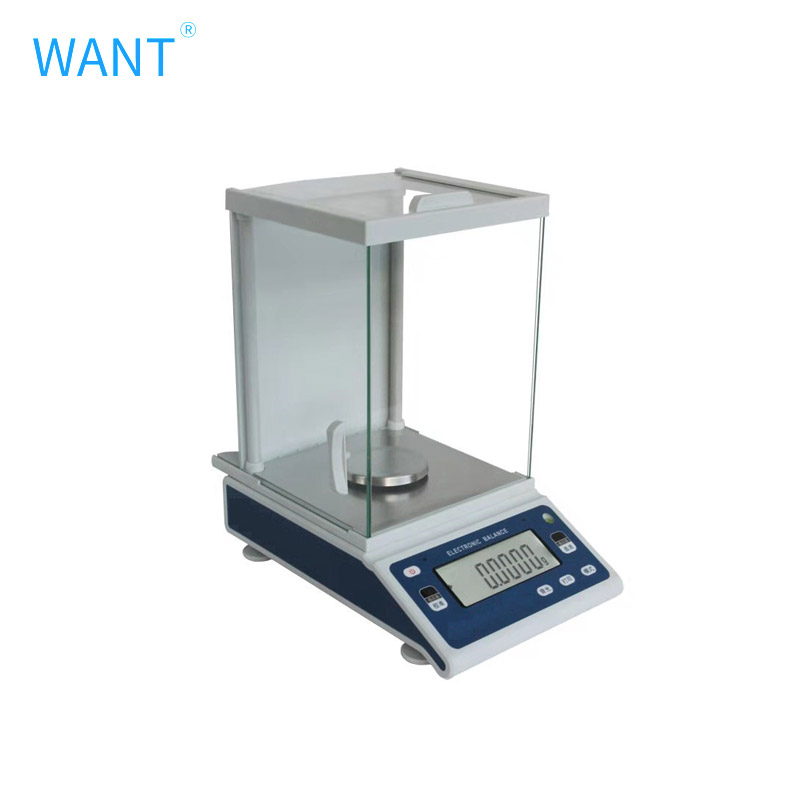
Accuracy and repeatability are the most critical factors when you choose a laboratory balance. The WANT FA1204N offers 0.0001g readability and 0.1mg precision, and this directly decides if it can meet the demands of your experiment. Other elements like capacity, environmental conditions, advanced features, compliance, and total cost of ownership also play important roles. This article walks through each factor step by step. The right laboratory balance is not a one-size-fits-all decision. This guide helps you build a clear decision framework, so your investment works reliably in your specific lab environment.
Key Takeaways
Choose a balance that fits the weight and precision you need every day. Always leave extra space for containers and future tasks so you don't overload it.
Control your lab environment. Put the balance on a steady table, away from air vents and sunlight, so the readings stay stable.
Pick a balance that has internal calibration and connectivity. These features save time, cut down on mistakes, and help you meet strict standards like GMP and USP.
Think about the total cost, not just the price tag. A balance with good features and low upkeep costs saves you money in the long run.
Define Your Laboratory Balance Needs: Capacity, Readability, and Precision
Before you compare models or check specs, you must know what your work really needs. Every lab balance has a specific job, and picking one without clear needs often means you either pay too much for features you do not use or struggle with a tool that cannot handle your tasks. Start by looking at two key specs: capacity and readability.
Matching Capacity and Readability to Your Application
Capacity is the heaviest weight the balance can measure. Readability is the smallest weight change the balance can detect. These two specs work together, and you cannot think about one without the other. A balance with high capacity but poor readability will not help you weigh tiny chemical samples. On the other hand, a highly readable balance with low capacity will fail when you need to weigh heavier objects.
Think about your daily work. What is the heaviest container you put on the weighing pan? What is the largest sample mass you measure? The table below gives general advice for matching capacity to your work:
Application Context | Recommended Balance Capacity Range |
|---|---|
Standard analytical work in small academic labs (lightweight vessels) | 120–220 g |
Routine QC and R&D (heavier glassware, filter assemblies, larger samples) | 220–320 g |
Bulk operations or container-plus-sample combinations exceeding 320 g | >320 g (consider precision balances) |
You should also use a simple math step to find your needed capacity. First, list your heaviest container, like a 100 mL glass beaker or a filter setup. Second, add your largest sample mass to that container weight. Third, add at least 20–30% extra room above this total. This buffer protects the weighing cell from overload damage and gives you flexibility for future methods.
Buying more capacity than needed usually costs readability and repeatability at the edge; buying exactly to the expected max sample weight leaves no extra room for tare vessels or future methods.
The WANT FA1204N offers a 120 g capacity with 0.0001 g readability. This mix works well for typical analytical work where samples range from a few milligrams to around 100 grams. For lighter vessels and standard chemical analysis, this capacity gives plenty of room without losing the fine readability you need.
Understanding Precision and Repeatability Requirements
Readability alone does not promise accuracy. You must also think about precision, which is how consistently the balance gives the same result for the same sample. Repeatability, a key part of precision, measures the variation between repeated weighings of the same mass. A balance with great readability but poor repeatability will give you different readings each time, making your results unreliable.
The idea of minimum weighing quantity (MWQ) helps you see this link. For a balance with 0.0001 g readability, the MWQ is usually set as 1000 times the standard deviation of repeatability. For example, if the standard deviation is 0.05 mg, the MWQ becomes 50 mg. Samples below this mass have a relative weighing error over 0.1%, meaning the readability spec alone does not promise accuracy. You must use the balance within its MWQ to get acceptable uncertainty in chemical analysis.
Internal calibration plays a big role in keeping repeatability steady. The FA1204N has internal calibration, which removes the need for external weights and cuts down on operator mistakes. This feature keeps repeatability consistent, a key factor for quality control work where you need reliable results every time.
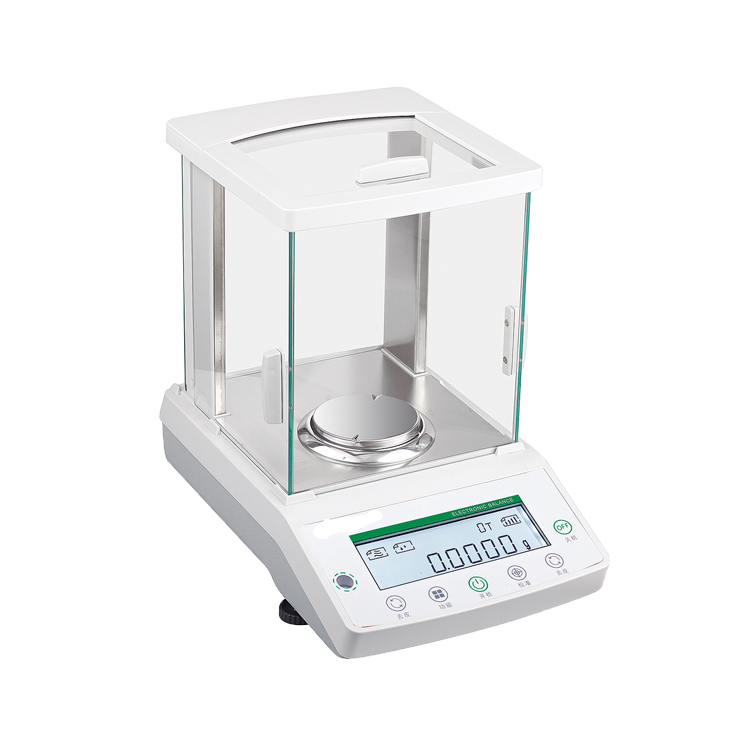
High sensitivity also makes the balance open to environmental disturbances. At a readability of 0.0001 g, even small air currents with a speed below 0.1 m/s can move the weighing pan enough to cause a reading error of 0.1 mg or more. This shows why analytical balances include fully enclosed draft shields. The FA1204N comes with a draft shield that blocks air currents and dust, keeping your measurements stable.
When you set your precision needs, think about the tolerance your work demands. Preparing chemical standards and pharmaceutical formulations needs the finest readability. Routine quality control may allow slightly coarser measurements. Match your precision needs to your actual work, not to the highest spec available.
Environmental Factors Affecting Balance Performance
When you use a balance that measures down to 0.0001 g, even tiny changes in the room can mess up your results. Shaking from machines nearby, moving air from an open door, and heat changes from sunlight all cause errors in your readings. Knowing these factors helps you place your balance so it works well every time.
Handling Shaking, Moving Air, and Temperature Changes
Three main things in the room can hurt how well your balance works. Each one affects the weighing part in its own way, but you can control all three with smart placement and good habits.
Shaking comes from many places. People walking in busy hallways, big machines in rooms next door, and even the lab table itself can send shakes to your balance. These shakes make the reading jump around or change slowly. To cut down on shaking, put your balance on a strong table that does not move. Stay away from spots near doors, elevators, or heavy equipment.
Moving air is a big problem for very exact measurements. At 0.0001 g readability, even a soft breeze from an air vent or someone walking by can push the weighing pan enough to cause mistakes. Here are good ways to lessen the effect of moving air:
Put the balance in a quiet area to cut down on air movement from people nearby.
Keep balance doors shut while weighing to stop air from getting in.
Keep it out of direct sunlight, because uneven heat can make readings drift.
Cut down on air flow from windows, heaters, air vents, and fans.
Use sliding doors to reduce air movement caused by opening and closing.
Set air conditioning to low flow and add extra protection if needed.
Do not put balances in the path of AC or heater air, and keep them away from doors and windows.
Do not use high-resolution balances in busy areas, because people moving around create drafts.
Temperature changes make the parts inside the balance grow or shrink, which causes readings to drift. The WANT FA1204N needs a steady temperature between 17.5°C and 22.5°C and humidity between 50% and 75%. Let the balance warm up and settle in its spot before you take important measurements.
WANT’s Design Choices for Steady Conditions
The FA1204N lab balance has several design features that help it work well in controlled rooms. These features work together to guard the weighing part from room disturbances.
The balance uses an aluminum shell that gives it strength and cuts down on shaking. This cast-aluminum outer cover also helps stop static electricity and jamming. The material stops electric charges from building up, which could otherwise mess up sensitive weight readings. It also stops mechanical jamming that could affect the moving parts inside.
The draft shield is a key part for exact weighing. The FA1204N has a large wind proof cover that lessens air flow interference and keeps the weighing area steady. The sliding glass screen opens wide for easy sample access while still letting you see clearly. This design cuts down on disturbance because you do not have to force the door open or shut.
The stainless steel pan, which is 80 mm across, gives a steady surface for your samples. The pan is simple to clean and does not react with most chemicals. The draft shield fully covers this pan, keeping it safe from moving air and dust.
The balance also has internal calibration, which fixes itself when the room changes. When temperature or humidity shifts, the internal calibration system corrects the balance without needing outside weights. This saves time and lowers the chance of operator mistakes.
For the best results, always put your FA1204N in a spot that meets its room needs. Use a special weighing table or a strong bench away from shaking. Make sure the room stays at the right temperature and humidity. With good setup and the FA1204N's design features, you can get steady, reliable results every time.
Advanced Features for Your Laboratory Balance in 2026
Modern lab balances do much more than just weigh things. They now act as data hubs in your digital workflow. The right connectivity features save you hours of manual typing and keep your data safe from human mistakes. Before you buy, think about how your balance will connect with your other systems.
Connecting with LIMS and Automation Systems
Your balance should fit smoothly into your existing lab information management system (LIMS). Typing data by hand causes errors. It also takes up time. A connected balance sends results straight to your LIMS or electronic lab notebook. This automation removes typing mistakes and makes your work faster.
Several communication methods link balances to outside systems. You will see these options on modern instruments:
Serial connections (RS-232) for direct point-to-point links
Network connections (TCP/IP) for shared lab environments
File exchange formats (CSV, TXT, XML, Excel) for simple data transfer
APIs (REST, SOAP) for custom integrations with your software
Web services and middleware for complex enterprise setups
Industry 4.0 adoption pushes the move toward smart, connected weighing systems. IoT-enabled data logging expands what your balance can do. Real-time data analytics and remote monitoring become possible when your balance links to the cloud. Regulatory groups in pharmaceutical and food safety fields now require traceability and calibration standards. This demand makes certified, connected balances more necessary.
The FA1204N supports these integration needs with standard connectivity options. You can connect it to your LIMS using common protocols. This feature makes the balance a smart pick for modern labs that value automation.
Internal Calibration and Data Integrity
Internal calibration changes how you keep accuracy. The FA1204N includes this feature, so you do not need external weights. You reduce operator mistakes because the system calibrates itself automatically. This built-in system keeps your results steady without extra steps in your routine.
Fast stabilization time matters for efficient workflows. The FA1204N stabilizes in less than 8 seconds. You spend less time waiting for readings and more time finishing your analysis. This speed helps when you process many samples in one session.
Data integrity features grow more important in regulated industries. Audit trails record every action you take on the balance. Compliance with 21 CFR Part 11 becomes possible when your instrument supports electronic signatures and secure records. WANT balances support these features, helping you meet strict regulatory rules.
Predictive maintenance analytics represent the next step. Some modern balances study usage patterns to predict when service is needed. Automated dispensing and real-time data integrity checks further reduce manual work. These features protect your data and extend the life of your lab balance.
Choose a balance that combines internal calibration with strong data management. You gain accuracy and compliance in one tool. This combination protects your results and makes your regulatory audits easier.
Cost and Compliance Considerations for Balances
Rules from regulators shape your buying choice more than anything else. Labs in drug, food, and clinical fields must follow strict guidelines. These rules control how you weigh samples, record data, and care for your tools. A balance that fails these rules puts your whole lab at risk.
Navigating GMP, ISO, and USP Standards
Good Manufacturing Practice (GMP) and ISO rules require written proof that your instrument is accurate. The United States Pharmacopeia (USP) sets exact performance standards for balances used in drug testing. USP Chapter 41 defines two key tests: accuracy and repeatability. You must pass both to use your balance for official compendia tests.
Requirement | Description | Acceptance Criteria | Frequency |
|---|---|---|---|
Accuracy | Systematic error test using a single test load between 5% and 100% of capacity. | 0.10% of the test weight value. | Risk-based; typically periodic. |
Repeatability | Random error test; minimum weight calculation from 10 replicate weighings at ~5% of capacity load. | 2s / 0.001 (minimum weight); also 2s / smallest net weight ≤ 0.10%. | Risk-based; commonly monthly to quarterly. |
Minimum weight floor | If 2s falls below 0.41d, use 0.41d as the minimum weight. | 0.41d (where d is display readability). | Determined during repeatability test. |
The WANT FA1204N meets Class I accuracy standards. This rating means it reaches the top precision level that regulators require. Its internal calibration system helps you stay compliant without external weight sets. You lower the chance of operator mistakes during routine checks. This feature also makes your audit paperwork easier.
Budgeting for Calibration, Maintenance, and Future-Proofing
Your starting price is only part of the total cost. Calibration services, upkeep, and future upgrades add up over time. A lab balance with internal calibration cuts long-term costs. You skip paying for external calibration weights and the work to use them. The FA1204N calibrates itself on its own, reducing downtime and service fees.
Buying strong features now saves money later. A balance with connectivity options and data integrity tools prevents costly upgrades. You avoid re-certification costs when rules change. The FA1204N supports audit trails and compliance features that meet current standards. This forward-looking design protects your investment for years.
Think about the full ownership period when comparing prices. A cheaper balance may need frequent recalibration or fail compliance audits. These hidden costs quickly exceed the price gap. Pick a balance that meets your needs today and adjusts to future demands. The FA1204N offers this mix of performance and value.
You now have a clear way to pick your lab balance. First, decide what accuracy and capacity you need. Think about the environment in your lab. Use modern features like internal calibration. Consider the total cost, not just the price. The WANT FA1204N shows these best practices for busy labs.
Follow this framework:
Figure out the readability and repeatability you need.
Check your lab for shaking and moving air.
See what rules you must follow, like GMP and USP.
Compare the full cost of each balance model.
Ask for a test in your own lab before you buy.
Try out balances in your own lab. Every lab is different. A balance that works well in a showroom may not work in your space.
FAQ
How often should I calibrate my FA1204N balance?
Calibrate your balance whenever you move it or when the room temperature changes beyond the set range. The internal calibration system makes this easy. You press a button, and the balance fixes itself without needing extra weights.
What happens if my lab temperature exceeds the recommended range?
The FA1204N works best between 17.5°C and 22.5°C. Outside this range, readings may shift. Your samples might still weigh correctly, but you cannot trust the results for exact analytical work. Keep your lab within the stated conditions for dependable measurements.
Can I connect the FA1204N to my existing LIMS?
Yes. The balance supports standard connection options like RS-232 and network protocols. You can send weighing results straight to your LIMS or electronic lab notebook. This setup removes manual data entry mistakes and makes your documentation faster.
Does the FA1204N meet regulatory requirements for pharmaceutical labs?
The balance meets Class I accuracy standards, which satisfies USP Chapter 41 rules for accuracy and repeatability testing. Its internal calibration and audit trail features support compliance with GMP and 21 CFR Part 11 regulations. You can use it with confidence in regulated settings.
What maintenance does the FA1204N require?
Clean the stainless steel pan and draft shield regularly with a soft, lint-free cloth. The internal calibration system lowers the need for outside service. With proper care, the balance keeps its accuracy for years without frequent professional upkeep.