



Precision Balance vs Analytical Balance: How to Choose the Right One?
 Aug 20, 2026|
 View:97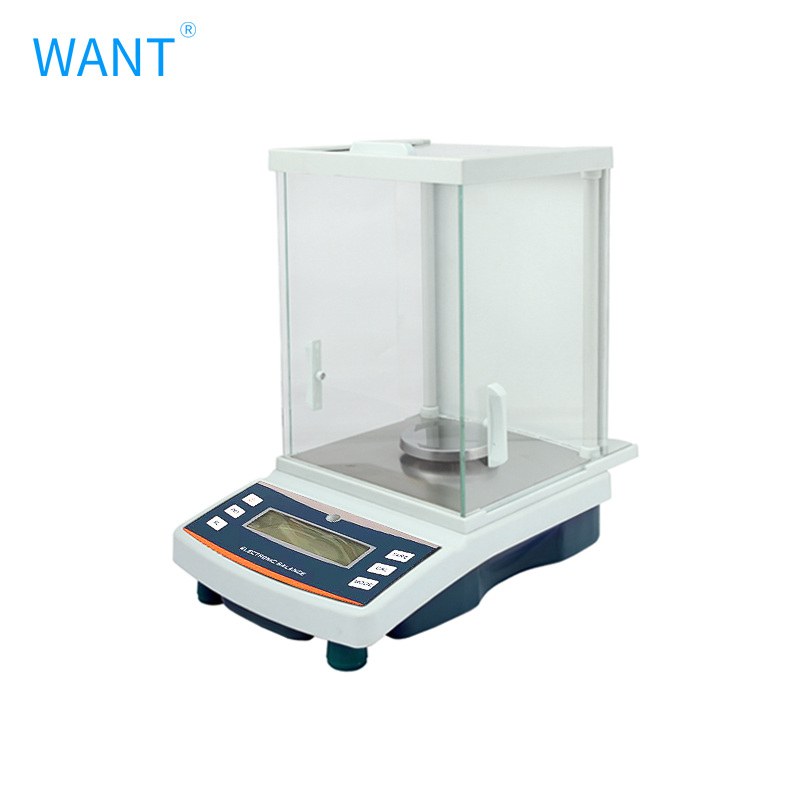
Choosing between an Analytical Balance and a Precision Balance depends on the readability you need and the type of sample you weigh. Analytical Balances measure down to 0.1 mg, which is great for very small amounts. Precision Balances handle bigger samples, with readability around 0.01 g or 0.001 g. The global analytical balance market is about $1.3 billion in 2024, and it is expected to grow to $2.1 billion by 2034. You need to think about capacity, sensitivity to the environment, calibration, and cost. Research, quality control, and production settings each need different weighing solutions. Knowing these factors helps you get accurate and efficient results. Whether you need an Analytical Balance for pharmaceutical work or a Precision Balance for industrial tasks, your choice directly affects measurement quality. This guide explains the main differences so you can pick the right tool for your lab or industry.
Key Takeaways
Choose an analytical balance for very small samples that need 0.1 mg readability. Choose a precision balance for bigger samples that need 0.001 g to 0.1 g.
Analytical balances require draft shields and stable environments. Precision balances work fine on regular lab benches without special protection.
Internal calibration automatically adjusts itself, making it easy. External calibration costs less but you have to handle certified weights by hand.
Choose a balance that matches your sample size, readability, and budget. That way, you get accurate results without paying for extras you don't need.
Readability: The Core Difference Between Precision and Analytical Balances
Defining Readability in Weighing
When you check a balance's specs, the first number you see is often readability. Readability is the smallest weight change the scale can show. For example, a balance with 0.001 g readability shows changes in steps of 0.001 g. This number tells you how fine the display is, but it doesn't tell you everything about accuracy.
Readability is the smallest weight change a scale can show, like 0.001g means the display updates in steps of one thousandth of a gram. It is not the same as accuracy (how correct the reading is) or repeatability (how consistent it is across multiple weighings).
Many people mix up readability with accuracy. They are different. Readability is the smallest weight change a scale can show. Accuracy is how close the shown weight is to the real weight. A scale with fine readability can still be wrong if not calibrated or used in bad conditions. Readability only shows the display detail, not how correct the measurement is.
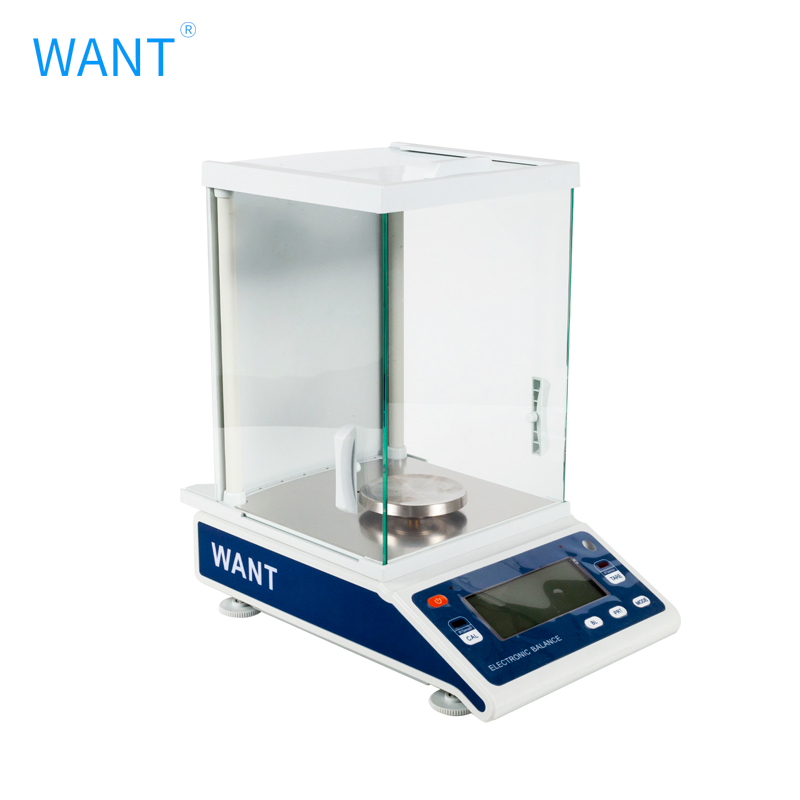
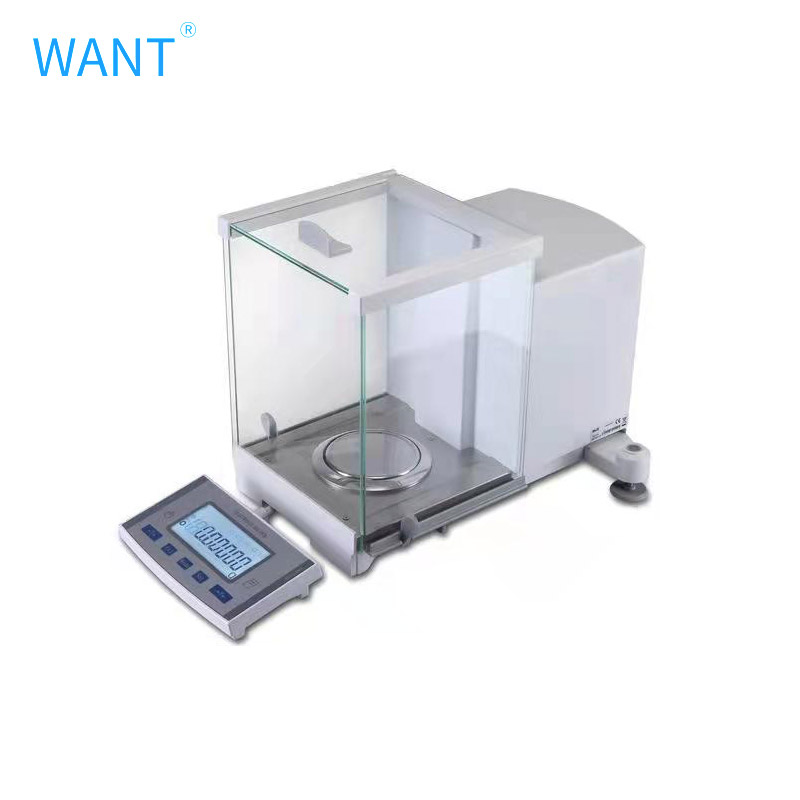
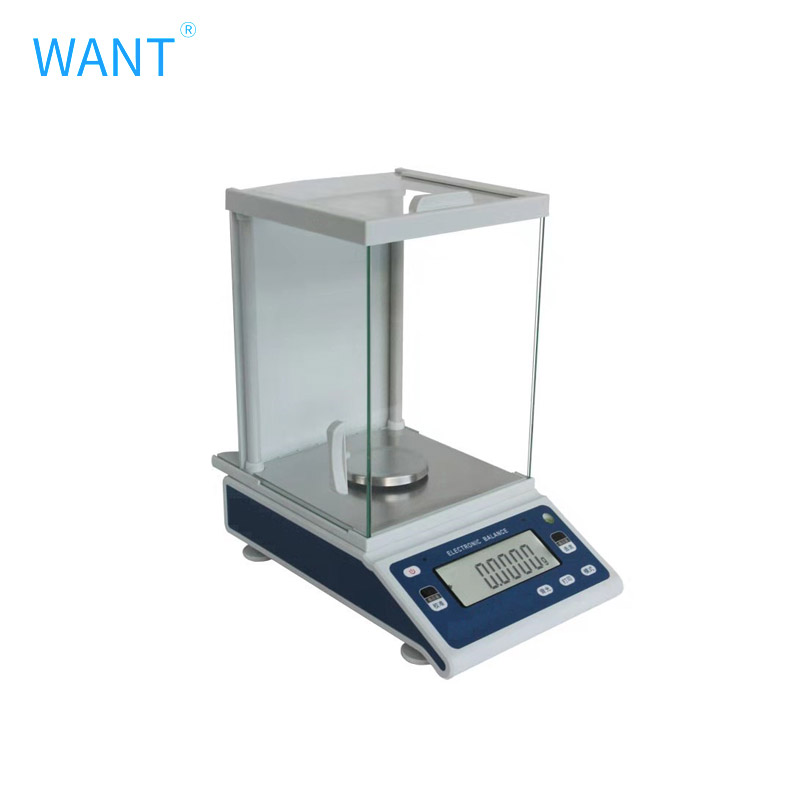
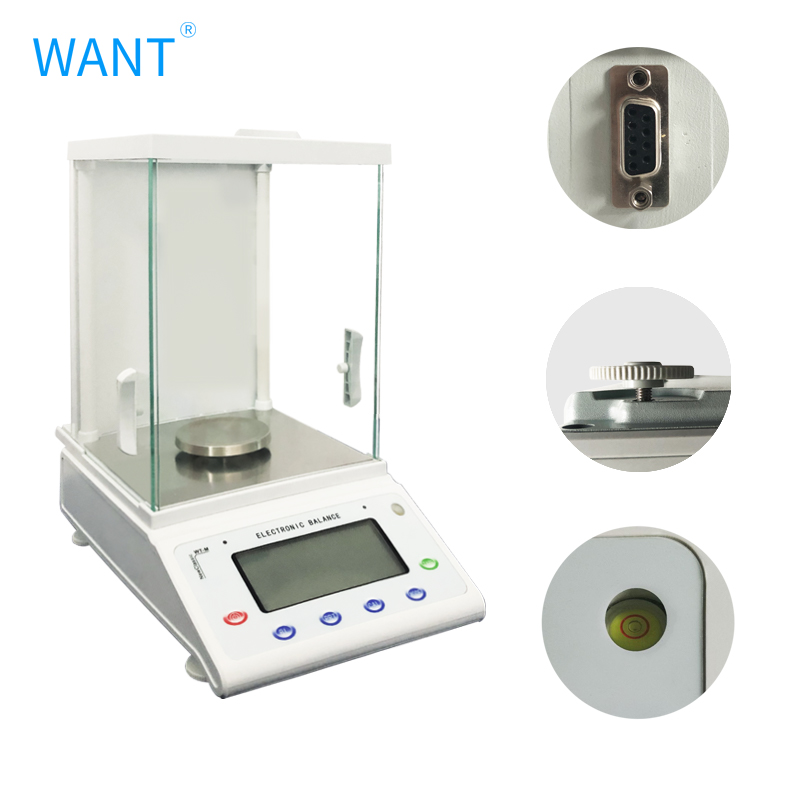
So what sets an Analytical Balance apart from a Precision Balance? The readability limit. An Analytical Balance usually reads to 0.1 mg (0.0001 g). A Precision Balance reads to 0.001 g or 0.01 g. This difference in readability drives many other design choices, including the need for draft shields.
Scale Type | Readability | Draft Shield Required? |
|---|---|---|
Analytical Balances | 0.0001g (0.1 mg) | Yes |
Precision Balances | 0.01g to 0.1g | No |
An Analytical Balance needs a draft shield because air movement can disturb the reading at such fine steps. A Precision Balance, with its larger readability, doesn't need this protection in most places. This makes the Precision Balance more portable and easier to use in busy workspaces.
How Readability Guides Your Choice
Your choice between an Analytical Balance and a Precision Balance starts with the weight range you need to measure. If you work with tiny samples, you need the fine readability of an analytical balance. If you weigh larger samples, a precision balance gives you the right mix of detail and capacity.
Precision balances are standard tools in quality control departments and testing areas. They are built to give finer readability than regular digital scales. The typical readability range for a precision balance used in quality control for food products falls between 1 g and 0.001 g (1 mg). This range lets you check product weights quickly without being too sensitive to environmental factors.
WANT's electronic balance range covers both types, from 0.01 mg to 0.1 g. This means you can find a model that fits your exact readability needs. Whether you need a semi-micro balance for pharmaceutical research or a general-purpose precision balance for industrial weighing, WANT offers options across the whole range.
Think about your daily work. Do you measure samples under 1 gram often? Then an Analytical Balance with 0.1 mg readability is your tool. Do you weigh ingredients or parts in the 1 g to 500 g range? A Precision Balance with 0.01 g or 0.001 g readability works better for you. The right choice saves you time and cuts down on errors from being too sensitive.
Think about the environment too. An Analytical Balance needs a stable table, no drafts, and careful handling. A Precision Balance works on a regular lab bench with normal air flow. If your workspace is busy or open, a Precision Balance may be the practical choice even if you sometimes want finer detail. Readability guides not just which balance you buy, but how you set up your weighing station and train your operators.
Precision Balance vs Analytical Balance: Key Features Compared
Capacity and Sensitivity Differences
Capacity and sensitivity work together to decide what you can weigh. An Analytical Balance can measure very small amounts down to 0.1 mg, but its top capacity usually stays between 120 g and 320 g. You cannot put a large beaker or a bulk sample on it. A Precision Balance, however, can handle much heavier loads. Common models range from 500 g up to 10,000 g, and some industrial versions can weigh several kilograms. This makes the Precision Balance the better pick for production floors and quality control lines where sample sizes change a lot.
The trade-off is clear when you compare them side by side. Finer readability means smaller capacity. You give up range to get detail. If you need to measure 200 g of powder to 0.1 mg, you need an Analytical Balance. If you weigh 5 kg of raw material and only need 0.01 g accuracy, a Precision Balance works better. WANT's electronic balance line covers both ends, from 0.01 mg semi-micro models to 0.1 g general-purpose scales with capacities up to 30 kg. You can match the sensitivity to your real workload without paying extra for precision you do not need.
Feature | Analytical Balance | Precision Balance |
|---|---|---|
Readability | 0.1 mg (0.0001 g) | 0.001 g to 0.1 g |
Maximum Capacity | 120 g – 320 g | 500 g – 10,000 g |
Draft Shield Required | Yes | No |
Typical Cost | Higher | Lower |
Environmental Sensitivity and Draft Shields
An Analytical Balance reacts to tiny forces. That sensitivity makes it open to its surroundings. A 1°C temperature change can cause big measurement errors. You should keep the balance in a steady place between 20°C and 25°C. Humidity also matters. Keep relative humidity between 40% and 60%. Low humidity creates static charges that pull or push lightweight samples. High humidity causes moisture absorption and rust.
Air currents are the biggest problem. A person walking by or an open door creates enough air movement to make the reading shift. That is why every Analytical Balance has a draft shield. You must keep the glass doors closed while measuring. Put the balance in a low-traffic area away from vents, heaters, and direct sunlight.
A Precision Balance handles these conditions much better. Its larger readability means small air movements do not change the reading. You can use it on a regular lab bench without a draft shield. Vibration still matters, but you need less protection. For busy workspaces, this toughness makes the Precision Balance the easier choice. You get reliable results without controlling every part of the environment.
Calibration and Data Traceability for Each Balance Type
Internal vs External Calibration Options
Calibration keeps your balance correct over time. Both analytical and precision balances need it. WANT balances offer internal and external calibration. This gives you options based on your work and budget.
Internal calibration uses a built-in motorized weight. You press a button, or the balance does it on its own. The weight loads onto the system, adjusts the span, and returns to rest. You do not need to touch any weight. You do not even open the draft shield. External calibration requires you to place a certified test weight on the pan by hand. You run the routine from the keypad. This method costs less at first but needs more time and care.
The table below shows the key differences between these two methods.
Aspect | Internal Calibration | External Calibration |
|---|---|---|
Mechanism | Built-in motorized weight | Manual test weight placement |
Automation | Automatic (time, temperature, power loss) | Manual process |
Cost | Higher upfront; no weight set needed | Lower upfront; weight set required |
User Involvement | Minimal; no manual handling | High; operator time and handling |
Internal calibration triggers include time passed, temperature changes, and power outages. External calibration triggers include moving the balance, too much vibration, or performance changes. Choose internal calibration for ease in busy labs. Choose external calibration for lower cost and more control.
USP <41> describes calibration and periodic performance checks as complementary activities. Frequency should come from risk assessment within your quality management system. A daily repeatability test is not universally required.
GLP/GMP Compliance and Data Logging
Regulated industries like pharmaceuticals follow GLP and GMP standards. These standards require you to qualify, calibrate, and maintain your balance. You must document every step.
WANT balances comply with ISO 9001, CE, and RoHS certifications. They also meet the GB/T 26497 national standard. This compliance helps you pass audits and maintain data integrity.
Data integrity follows the ALCOA principles.
Attributable: Every action links to a specific person
Legible: Records are readable and permanent
Contemporaneous: Data recorded in real time
Original: First record is preserved
Accurate: No errors or manipulation
Documentation includes raw data, logbooks, worksheets, calibration records, and test reports. Many labs also use ALCOA+, adding Complete, Consistent, Enduring, and Available.
Apply calibration schedules based on events as well as fixed intervals. A balance moved between rooms may need immediate recalibration regardless of the last scheduled date.
Choose a balance that supports your compliance needs. WANT's electronic balances offer features that help you meet GLP/GMP requirements.
Common Applications for Analytical and Precision Balances
When to Use an Analytical Balance
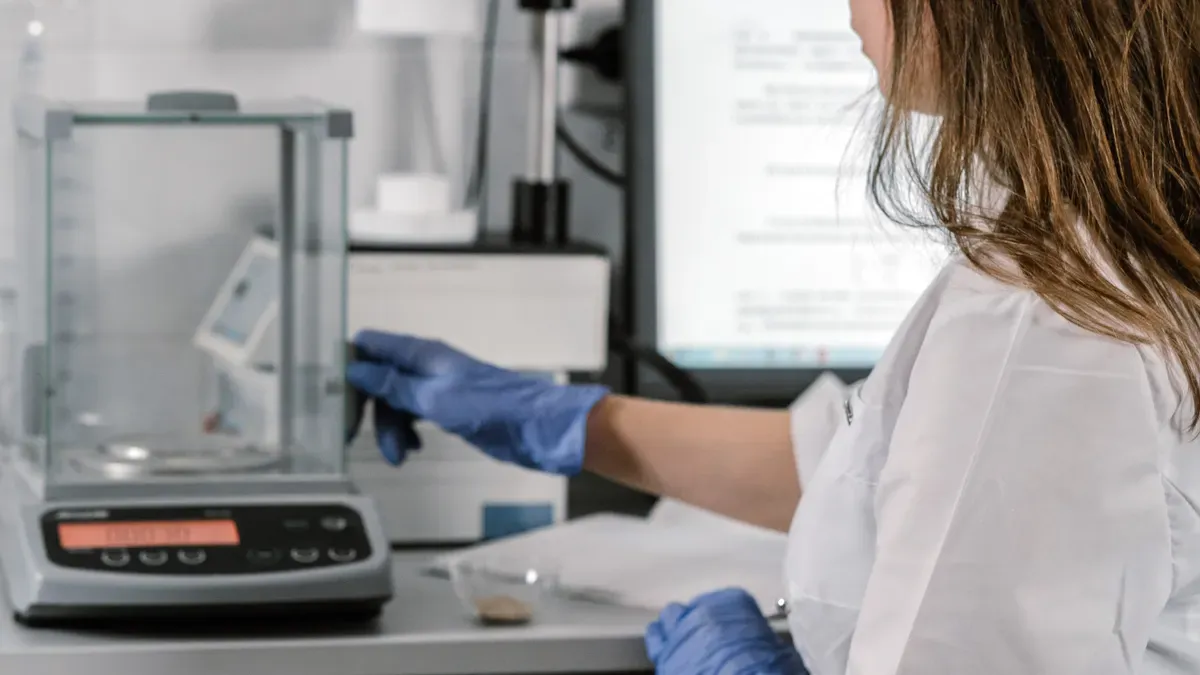
Pick an analytical balance when your work needs very high accuracy for tiny samples. Pharmaceutical research is the top use. Making active ingredients, preparing standard solutions, and weighing reference standards all need 0.1 mg readability. One milligram of error can change a drug's strength or ruin a calibration curve.
Analytical balances also help in many other fields. You will see them in:
Agriculture for checking pesticide leftovers and testing soil
Botanical research for pulling out and weighing active compounds
Education for teaching exact measurement skills
Laboratory settings for general analytical chemistry
Materials testing for studying small samples
Veterinary practice for making accurate medicine doses
Food and beverage quality control also depends on analytical balances. Testing for contaminants, measuring additives, and checking nutritional content all need fine readability. Chemical processing uses them for weighing catalysts and preparing reagents. Raw material inspection relies on them to confirm purity and makeup.
Choose an analytical balance when your sample weighs under a few grams and your tolerance is at fractions of a milligram. If you work in a controlled space with little air movement, this balance gives the accuracy your protocol needs.
When to Use a Precision Balance
Precision balances handle bigger samples with less strict readability. The textile industry depends on them heavily. You use a precision balance to measure fibers, yarns, dyes, and chemicals. This keeps quality steady and batch formulas correct every time.
Fabric weight measurement, called GSM (grams per square meter), relies on precision balances. You cut a known area of fabric, weigh it, and figure out the GSM. This check confirms product specs during production. In-process checks catch problems before they turn into costly defects.
Dye formulation also benefits from precision balances. You weigh dyes and finishes accurately to match colors batch after batch. Automated weighing systems work with these balances for steady production. Regulatory compliance also needs accurate weight records for chemical handling and environmental reporting.
The food industry uses precision balances for portion control, ingredient batching, and package weight checks. You can weigh 5 kg of flour or 200 g of seasoning with dependable accuracy. Medical facilities use them for making compounds and checking inventory. Schools teach measurement basics with these tough instruments.
Choose a precision balance when your samples range from grams to kilograms and your readability needs fall between 0.001 g and 0.1 g. WANT's electronic balances serve textiles, food, medical, and education sectors with models across this whole range.
How to Choose: Analytical Balance or Precision Balance for Your Lab
Consider Readability, Capacity, and Budget
You need a clear plan when picking between an Analytical Balance and a Precision Balance. Start with the readability you need. Ask yourself what is the smallest weight change you must see. If you work with samples under one gram, you need 0.1 mg readability. That means an analytical balance. If your samples weigh more than a gram and you can accept 0.001 g or 0.01 g steps, a precision balance works well.
Next, think about capacity. Analytical balances top out around 120 g to 320 g. Precision balances handle much heavier loads, from 500 g up to 10,000 g or more. You must match the balance to your real sample sizes. Buying a balance with too little capacity forces you to split samples. Buying one with too much capacity wastes money on features you do not need.
The table below sums up the key factors you should check.
Factor | Description | Impact on Selection |
|---|---|---|
Weighing Capacity | Maximum weight the balance can measure | Precision balances typically have higher capacity; analytical balances lower capacity for sensitive measurements. |
Readability | Smallest increment displayed | Analytical: 0.1 mg; Precision: 0.001 g to 0.01 g. Choose based on required precision. |
Repeatability | Consistency of measurements | Both require high repeatability; critical for analytical work. |
Accuracy | How close measurement is to true value | Analytical balances offer higher accuracy for small samples. |
Calibration Options | Internal vs external calibration | Internal auto-calibration convenient for analytical; external for precision may suffice. |
Environmental Conditions | Drafts, vibrations, temperature | Analytical balances need draft shields and stable environment; precision balances less sensitive. |
Application Requirements | Sample type, regulatory needs | Pharmaceutical/formulation need analytical; routine weighing use precision. |
Budget plays a big part in your final choice. Analytical balances cost more because of their advanced technology. Precision balances offer a cheaper option for routine or less demanding weighing tasks. Small labs with tight budgets often pick precision balances unless their work truly needs the extra accuracy.
The total cost of ownership matters too. Precision balances are tougher and less affected by the environment. You do not need anti-vibration tables or special draft shields. This cuts your setup costs a lot. Analytical balances need controlled environments, which adds expense beyond the purchase price.
Evaluating WANT's Range of Electronic Balances
WANT offers a full lineup that covers both balance types. You can find a model that fits your exact needs without overpaying. The product range spans from 0.01 mg semi-micro balances to 0.1 g general-purpose scales. Maximum capacities reach up to 30 kg, so you have options for nearly any weighing task.
The WT-B series serves as a reliable precision balance for routine work. You get solid construction with stainless steel platforms and ABS plastic bases. These balances handle the demands of textile, food, and education settings. The FA series provides analytical balance performance for laboratory research and pharmaceutical formulation. Both series comply with ISO 9001, CE, and RoHS certifications.
You can choose between touch screen or keypad interfaces. Internal or external calibration options give you flexibility based on your workflow. LCD or LED displays suit different lighting conditions. Many models offer waterproofing with IP65 ratings and dual display features.
WANT balances deliver great value for your money. The company provides OEM support, competitive pricing, a one-year warranty, and lifetime maintenance. This support lowers your long-term risk and keeps your equipment running reliably.
Your decision comes down to matching the balance to your work. Consider your readability needs, sample sizes, environment, and budget. Then look at WANT's range to find the right fit. Whether you need the fine detail of an analytical balance or the rugged versatility of a precision balance, you will find a cost-effective solution that meets your standards.
Your choice depends on readability, sample size, and budget. Analytical balances give the best accuracy for very small samples. Precision balances are sturdy and hold more weight for everyday tasks. WANT's electronic balance line includes both types, from 0.01 mg analytical models to 0.1 g precision scales. All units have ISO, CE, and RoHS certifications. You can find a balance that fits your work without overpaying. For help choosing the right tool, email us at jay.tang@wantbalance.com or browse our catalog at wantbalance.com. We will help you find the right one for your lab.
FAQ
Can I use a precision balance for pharmaceutical research?
Yes, but only for jobs that don't need 0.1 mg readability. Making medicine often needs very high accuracy for active ingredients and standard samples. For weighing larger filler ingredients or packaging, a precision balance works well. Pick the balance that matches the exact tolerance your procedure needs.
How often should I calibrate my balance?
How often you calibrate depends on how much you use it, the room conditions, and the rules you follow. WANT balances with internal calibration can adjust on their own based on time, temperature changes, or power loss. For external calibration, check your balance once a month or after you move it. Labs that follow strict rules should use a schedule based on risk.
Do I need a draft shield for a precision balance?
No. Precision balances with 0.001 g or 0.01 g readability handle normal air flow in most work areas. You can put them on a regular lab bench without special covers. But analytical balances need draft shields because moving air changes the reading at 0.1 mg level.
What is the maximum weight each balance type can handle?
Analytical balances usually max out between 120 g and 320 g. Precision balances can hold much heavier loads, from 500 g up to 10,000 g or more. WANT's electronic balance line goes up to 30 kg capacity for factory jobs. Choose based on your biggest sample size, not just your smallest.