



Latest electronic analytical balance price trends for 2026
 Feb 12, 2026|
 View:972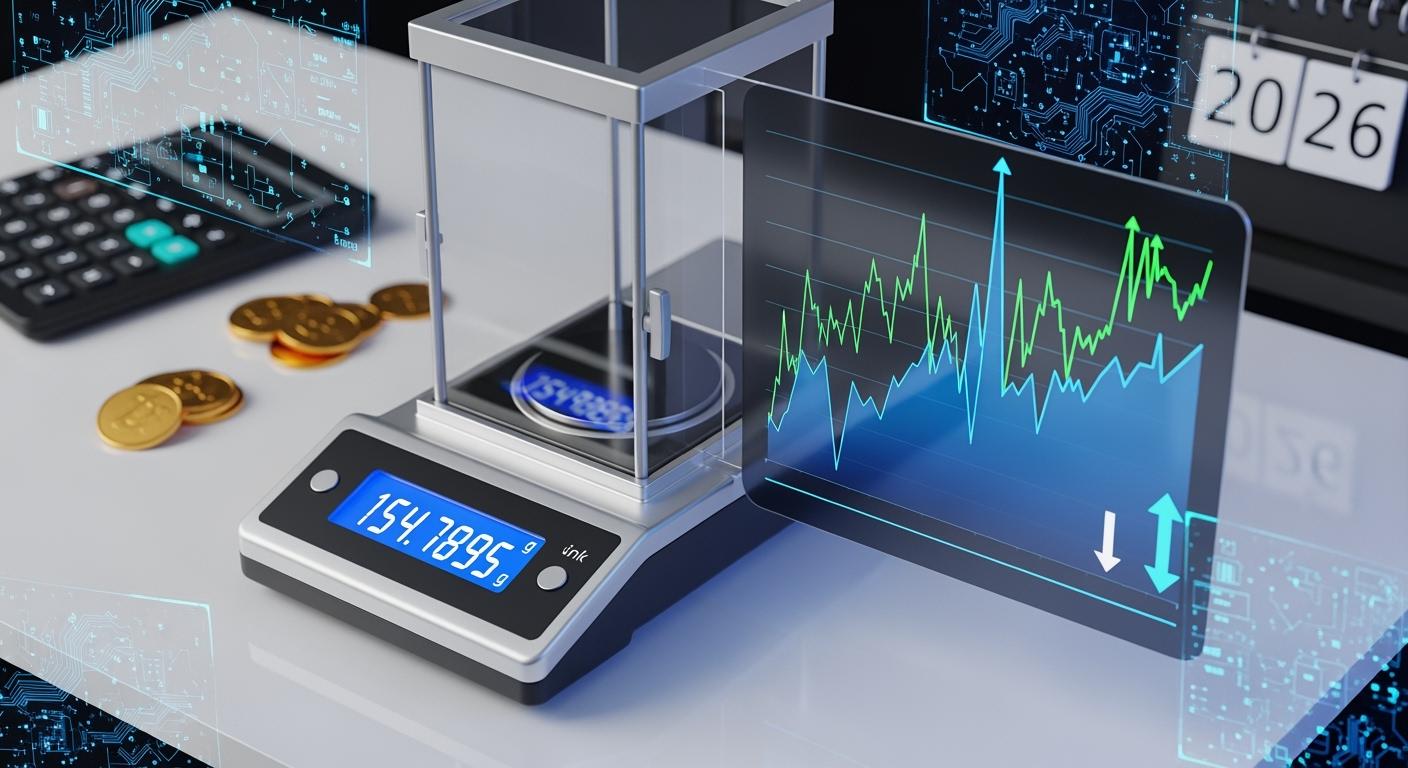
You can see electronic analytical balance prices go up in 2026. The market is growing fast because more people want these balances. Experts think prices will grow by 7.6% each year. You need to watch your money carefully. It is important to find a price that matches your budget and still gives good metrological performance.
The market will likely grow at 7.6% CAGR from 2026 to 2033.
Electronic analytical balance price overview 2026
Price ranges and averages
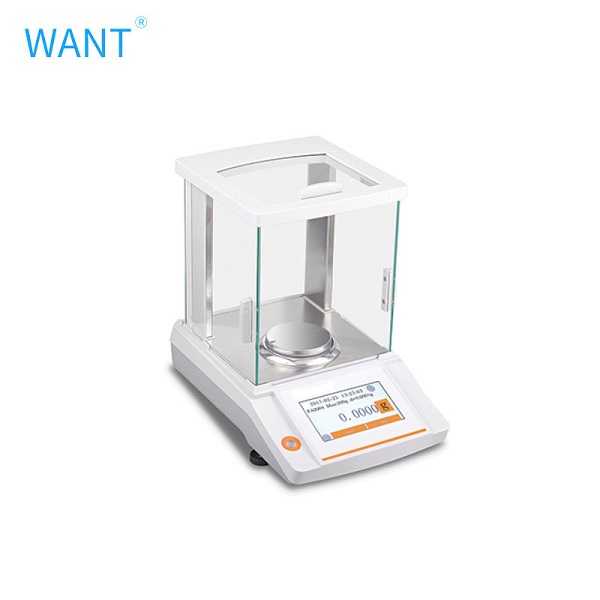
It is important to know the electronic analytical balance price before buying in 2026. The market for these balances is getting bigger. The sensor analytical balances market could be worth USD 0.10 billion in 2026. Prices can be very different depending on the type and features of each balance.
Here are the usual price ranges for different electronic analytical balances in 2026:
Standard precision balances: $1,000 – $3,800
Advanced microbalances: $10,000 – $25,000+
Mid-range laboratory balances: $3,500 – $9,500
Pick a balance that fits your budget and needs. If you work in a research lab, you might need a more expensive model. If you work in a school or a regular industry, a basic model may be enough. The electronic analytical balance price changes with accuracy, capacity, and extra features. Always check if the price matches what you get.
Top supplier price comparison
There are many top suppliers in the electronic analytical balance market. Each one has different models and features. Compare their prices to get the most for your money.
Model | Price Range |
|---|---|
Mettler Toledo MR Series | $3,800 – $9,500 |
Ohaus Pioneer PX Series | $1,000 – $3,800 |
A&D Apollo GX-AE Series | $3,500 – $6,000 |
Sartorius Quintix Pro | $4,500 – $7,500 |
Sartorius Cubis II | $10,000 – $25,000+ |
You will notice that electronic analytical balance prices are not the same for every supplier. Mettler Toledo and Sartorius have high-end models for advanced labs. Ohaus and A&D give good choices for less money, which helps if you have a smaller budget. Sartorius Cubis II is the most advanced and costs the most.
Tip: Always look at the supplier’s reputation and support before you buy. A higher price can mean better accuracy and a longer-lasting balance.
The main market leaders in 2026 are:
Mettler Toledo: Known for being precise and reliable in labs and factories.
Sartorius: Focuses on lab measurements and being eco-friendly.
A&D: Makes balances with strong research and steady performance.
Shimadzu: Makes analytical tools for checking the environment and quality.
Use this information to compare electronic analytical balance prices and pick the best supplier for you. Always think about your budget, the features, and the support you need.
Market trends and growth
Market size and forecast
The market for electronic analytical balances will get bigger in 2026. Experts think it will grow by 7.6% each year. The market value will reach about USD 0.10 billion in 2026. This growth will keep going as more labs and industries buy new measurement tools. The next few years will see steady growth. Both scientific research and industry help the market grow. New technology and better accuracy standards will change the market. Watch these trends if you want to buy new balances.
Demand drivers in 2026
Many things help the electronic analytical balance market grow fast. These reasons shape the trends in 2026:
Factor | Description |
|---|---|
Technological Advancements | Digital features, connectivity, and automation improve efficiency and accuracy. |
Rising Industrial Adoption | More industries use balances, which increases market demand. |
Digital Transformation | Labs and factories shift to digital solutions, boosting the need for advanced balances. |
Stringent Regulatory Standards | New rules require precise measurement, raising demand for high-accuracy devices. |
Growing Pharmaceutical Sector | More scientific research in pharmaceuticals needs accurate weighing for R&D. |
Significant R&D Investments | High spending on scientific research supports adoption of new analytical technologies. |
Accuracy and measurement standards are very important for these trends. Scientific research keeps the market moving forward. Remember these reasons when you buy your next balance.
Supplier comparison and value
Supplier A: Features and pricing
Supplier A sells the ATO-JA203 model. This balance is good for labs that want both value and performance. It can hold up to 200g and measures as small as 0.001g. This is enough for most lab work. The balance uses external calibration. It gets stable results in three seconds or less. The LCD display is bright and easy to read. The casting aluminum shell keeps the balance safe from rust. This helps it stay accurate for a long time. There is also a screen cover to protect from dust and bumps.
Feature | Details |
|---|---|
Model | ATO-JA203 |
Capacity | 200g |
Readability | 0.001g |
Min Weighing | 0.004g |
Repeatability | ±0.002g |
Linearity | ±0.003g |
Stable Time | ≤3s |
Pan Size | φ80mm |
Communication | RS232 |
Operation Temperature | 15-25 ℃ |
Calibration Method | External |
Weight | 10kg |
Special features you get:
Screen cover helps it last longer
LCD display is easy to see
Aluminum shell keeps it safe from rust
Supplier A lets you save time and money. You can set up the balance fast because of its design. Many people see a 30% faster setup than with Mettler Toledo or Sartorius. The balance connects to IoT and cloud systems. This lowers your total cost by 25%. You do not have to type in data by hand as much. The compliance modules help you follow local rules faster. This makes measurements 15% more accurate. If you want a balance that is simple, affordable, and accurate, Supplier A is a good pick.
Note: Supplier A’s test programs show real savings and quick setup for labs that need fast results.
Supplier B: Features and pricing
Supplier B is known for the Mettler Toledo MR Series. These balances are very precise and reliable. There are many models, with prices from $3,800 to $9,500. The balances use internal calibration. You do not need to calibrate them by hand. This saves time and helps avoid mistakes. The MR Series can measure as small as 0.1mg and hold up to 220g. The touchscreen is easy to use. You can connect the balance to your lab network with USB or Ethernet.
Key features:
Internal calibration makes setup easy
Touchscreen for quick use
Connects with USB and Ethernet
Anti-static shield keeps results steady
Supplier B is great for its support and long warranty. You can get help from service centers around the world. They also offer training. If you need a balance for tough research or quality checks, Supplier B gives you trusted results and help.
Tip: Pick Supplier B if you want a balance for busy labs and strong after-sales help.
Supplier C: Features and pricing
Supplier C sells the Sartorius Quintix Pro and Cubis II series. These are made for advanced research and strict rules. Prices start at $4,500 and go over $25,000 for Cubis II. The balances have automatic internal calibration and user management. You get a color touchscreen and can set up your own workflows. The Cubis II can be upgraded with new features as you need them.
Main features:
Automatic internal calibration
Color touchscreen with step-by-step guides
Modular design for upgrades
Advanced data tools and export
Supplier C cares about accuracy and following rules. You can meet strict standards with built-in compliance modules. The balances use eco-friendly materials. This helps labs reach green goals. If you work in a field with lots of rules or need top accuracy, Supplier C is a top choice.
Note: Supplier C’s balances are best for labs that need flexibility, rule-following, and new technology.
Supplier D: Features and pricing
Supplier D is known for the A&D Apollo GX-AE Series. These balances work well and cost less than some others. Prices range from $3,500 to $6,000. The balances can measure as small as 0.1mg and hold up to 220g. The Apollo GX-AE uses Smart-SHS technology for fast and steady results. You get a clear LCD display and simple buttons. The balances connect with RS232 and USB for easy data sharing.
Highlights:
Smart-SHS tech gives quick results
LCD display with easy buttons
RS232 and USB for connecting
Strong build for daily use
Supplier D gives you balances that work well and are easy to care for. They are simple to clean and fix. If you want a balance that is strong and not too costly, Supplier D is a good choice for schools and industry labs.
Tip: Supplier D’s balances are great if you want something simple and tough without extra features.
Price factors 2026
Technology and innovation
Technology changes how much electronic analytical balances cost in 2026. New features make lab balances smarter and easier to use. You get benefits like:
Digital workflows and IoT connections help you save money and get better results.
Smaller size and better sensitivity make weighing faster and more exact.
AI tools and portable balances help with field work and data checks.
These new ideas help you get very accurate results when you weigh things. You can trust your balance to give you good results in any place you need it.
Capacity and accuracy
How much a balance can weigh and how exact it is will change the price. Balances that hold more and are more exact cost more money. Better sensors make balances more exact and easier for small labs to buy. More labs and companies need exact measurements, so the market is growing. This is happening because more medicine is made and more labs do tests. When you pick a balance, make sure it fits what you need.
Sensors that measure many things and AI calibration make weighing more exact.
Wireless connections help you save money and make data easy to handle.
Smart scales with cloud help are used in medicine and food safety.
Brand and support
The brand and support you get change the price of your balance. Brands that people trust can charge more money. People pick these brands because they know the balances work well. Good support is important too. It helps you spend less money over time and keeps your balance working right. You can see the good things in this table:
Benefit | Description |
|---|---|
Lower TCO | 25% less cost because of smart data systems |
Core Advantage | IoT and cloud let you see data right away |
Differentiator | Special data system keeps data safe and easy to use |
Adoption Benefit | Less typing, fewer mistakes, and audits are easier |
Benchmark | Better than old balances that cost more to fix |
Measurability | Real cost savings shown in case studies |
You should always think about the brand and support when you buy a new balance. These things help you get the best value and make sure your balance works for a long time.
Digital analytical balance market recommendations
Best for research labs
If you work in a research lab, you need very accurate and reliable balances. Pick suppliers that have ISO/IEC 17025 accreditation and special features. Certified Scale is a top choice because it has tools for exact measurements and important certifications.
Supplier | Features | Accreditation |
|---|---|---|
Certified Scale | Many balances for exact measurements in different industries | ISO/IEC 17025 accredited |
Scales Galore is also a leader. They sell brands like Ohaus and Mettler Toledo. You get free shipping and extra deals, so it is easier to set up your lab. Always look for accuracy, precision, and stable results. Automatic calibration and data storage help you work faster and make fewer mistakes.
Best for education
If you are a teacher or student, you want balances that are simple and work well. Adam Equipment is the main brand for schools. They have models with different sizes and how small they can measure, which is good for science class.
Product Series | Capacity | Readability |
|---|---|---|
80g–510g | 0.01mg–0.0001g | |
Solis Analytical Balances | 120g–510g | 0.01mg/0.1mg–0.0001g |
Equinox Analytical Balances | 120g–510g | 0.01mg/0.1mg–0.0001g |
Luna Analytical Balances | 80g–250g | 0.0001g |
Polaris Semi-Micro Balances | 120g–420g | 0.00001–0.0001g |
Adam Equipment helps students and teachers start strong with easy balances.
Best for industry
If you work in industry, you need balances that are tough and can do many jobs. Mars Scales, CI Precision, and Detecto are good choices for labs in factories. Adam Equipment, RADWAG, and Bizerba SE & Co. KG also have balances that measure very well.
Supplier Name | Specialties |
|---|---|
Mars Scales | Electronic scales, digital balances, and custom weighing systems. |
CI Precision | Tools for quality checks and research, including microbalances. |
Detecto | Weighing systems for hospitals, food, factories, and stores. |
Adam Equipment Co Ltd | Good weighing tools since 1972. |
RADWAG | Exact balances and scales for labs and medicine. |
Bizerba SE & Co. KG | Tools for weighing, slicing, and labeling in many jobs. |
A&D Company, Ltd. | Measuring tools and scales for factories. |
Sartorius | Tools for medicine research and making biotech products. |
You can count on these suppliers to give you strong and correct balances for your work.
Buying tips for 2026
Choosing the right balance
Pick a balance that fits your lab’s needs. First, check where you will use the balance. The table below shows what is best for 2026:
Environmental Factor | Acceptable Range | Risk If Exceeded |
|---|---|---|
Ambient Temperature | 18–23°C ±0.5°C/hr | Calibration drift >0.0005 g/hr |
Relative Humidity | 45–60% RH | Corrosion of internal sensors |
Vibration | <2.5 µm @10–100Hz | Unstable readings |
Air Currents | <0.2 m/s | Buoyancy errors up to ±0.0003 g |
Follow these steps to pick a good balance: 1. The draft shield should cover the pan and use anti-static glass. 2. The balance needs temperature compensation with two sensors. 3. Check if the supplier has certified technicians close by. 4. Test if data connections and updates are safe. 5. The pan should resist chemicals. 6. Look for calibration memory in case power goes out. 7. The software must meet GLP standards.
Negotiation strategies
You can save money if you plan before buying. Compare prices from at least three suppliers. Ask about discounts for big orders or for schools. See if you can get free calibration or longer support. If you want special features, ask if they can add them for free. Always check if the supplier can match another company’s price.
Tip: Suppliers may give better deals at the end of a quarter or year.
Warranty and support
A good warranty keeps your balance safe. Most brands give two to five years of coverage. The table below shows common terms:
Manufacturer | Warranty Duration | Support Process |
|---|---|---|
Adam Equipment | Up to 5 years | Register online, contact service, send for inspection, repairs or replacement as needed |
Accuris Analytical | 2 years | Standard warranty, support for calibration and maintenance |
Always register your balance online. Call your local service center if you need help. If the problem is not fixed, send the balance for inspection. The company will repair or replace it under warranty.
Electronic analytical balance prices will go up in 2026. Supplier A is a good choice for simple needs. Supplier B and Supplier C are better for advanced labs. Adam Equipment is best for schools. Use these ideas to look at features, check support, and pick the right balance for your job.
FAQ
What factors increase analytical balance prices in laboratories?
Prices go up when more labs want balances. New technology and better quality checks also make prices rise. In the pharmaceutical field, new tools can cost more money.
How do analytical balances help pharmaceuticals and laboratories?
Analytical balances help you measure things very exactly. Labs and drug companies use them for research and to check sales. They also help track how much money is made. You can guess what you need to buy next and get the right results.
Why do laboratories choose specific analytical instruments for quality control?
Labs pick tools that fit what they need to do. These instruments help with quality checks and help labs make more money. They are needed because labs and drug companies want very exact results.