




How to Select the 0.0001 mg Analytical Balance for Your Laboratory
 Mar 19, 2026|
 View:709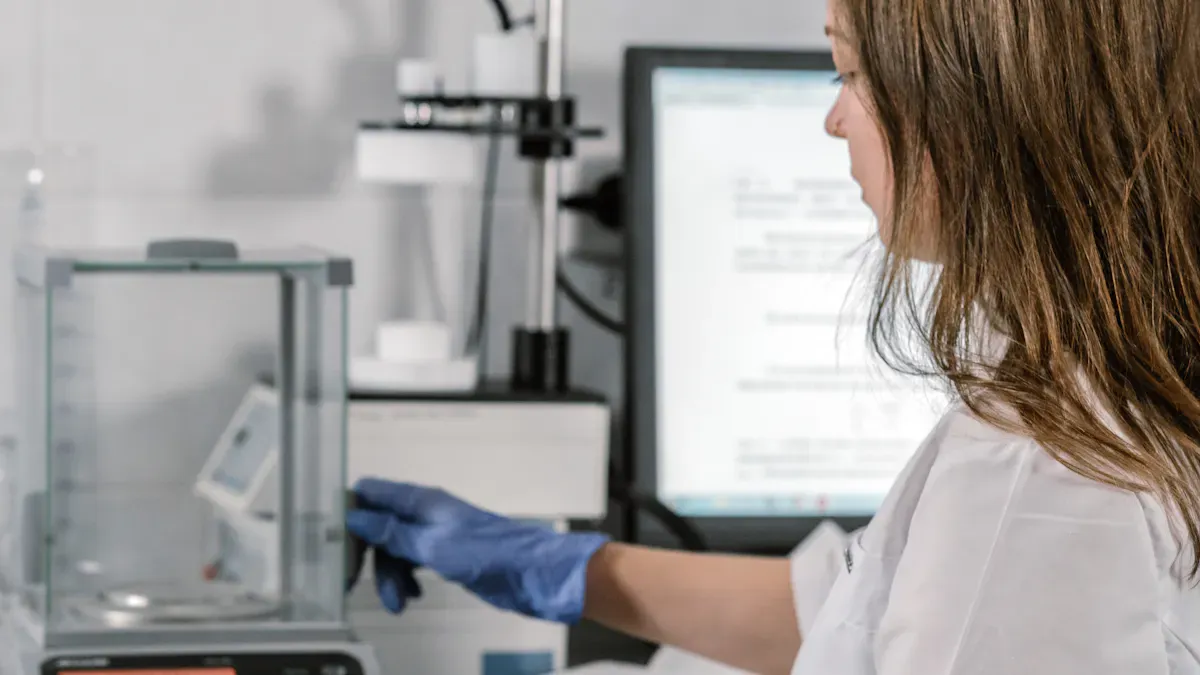
When selecting an analytical balance 0.0001 mg, it is essential to consider factors such as accuracy, capacity, ease of calibration, environmental control, and compliance. This high precision electronic balance is capable of measuring very small samples, ensuring that you obtain results you can trust. Various industries rely on an analytical balance 0.0001 mg for critical tasks.
Industry | Specific Use Cases |
|---|---|
Pharmaceuticals | Formulating custom medications, conducting quality tests, verifying content uniformity, and validating assays. |
Research and Development | Weighing catalysts, solvents, and materials for precise experiments in drug discovery and analysis. |
Jewelry and Precious Metals | Accurately weighing precious materials for valuation and crafting jewelry. |
Food and Beverage | Measuring ingredients for new product development and quality assurance, ensuring consistent recipes. |
Forensic Science | Weighing minute evidence, assessing controlled substances for legal purposes, and assisting in forensic investigations. |
Utilizing the 0.1mg Analytical Balance along with tips to clean and maintain a precision balance will help you maintain consistent measurements and ensure your equipment operates effectively. Incorporate an analytical balance 0.0001 mg in your laboratory for meticulous work.
Key Takeaways
Pick an analytical balance that fits your needs for accuracy and capacity. This helps you get results you can trust.
Calibrate your balance often. This keeps it precise and stops mistakes in measuring.
Watch out for things like temperature and air movement. Controlling these makes your balance more accurate.
Analytical Balance 0.0001 mg: Key Features and Importance

What Is an Analytical Balance 0.0001 mg?
An analytical balance helps you measure very small things. The 0.0001 mg analytical balance can notice tiny changes, as little as 0.1 mg. This balance is very exact and is used for making chemical standards and checking micro samples. You need to put it somewhere quiet because it is sensitive to air and movement. Analytical balances are important because they give results you can trust every time. Special sensors and shields help keep your measurements the same.
Can measure very small differences, like 0.0001 g (0.1 mg)
Needs a steady place so it does not make mistakes
Has smart sensors to help it be exact
Why Precision Matters in Laboratory Balance Selection
You want your lab results to be right. Being precise at 0.0001 mg helps stop mistakes and makes your work better. Analytical balances are important in science because even a tiny mistake can change everything. You should check and take care of your balance often so it works well. You need these tools to get results you can believe.
Helps stop mistakes in lab results
Makes science work more trustworthy
Needs regular care to work best
0.1 mg vs. 0.01 mg vs. 0.0001 mg Analytical Balance
Balance Type | Sensitivity | Best Use Cases | Risk of Error |
|---|---|---|---|
0.1 mg precision balance | 0.1 mg | Good for simple weighing | More mistakes in tiny work |
0.01 mg precision balance | 0.01 mg | Better for careful measuring | Still not best for tiny jobs |
0.0001 mg | Great for micro analysis | Least mistakes, most trust |
Tip: If you use a balance that is not very exact, you might get big mistakes in your results. This can mess up how you prepare samples and check quality. For tiny work, always pick a balance that is very exact.
How to Choose a High-Quality Analytical Balance
Define Accuracy and Weighing Range Needs
First, think about what you need to weigh. You also need to know how exact your results must be. The best weighing instrument depends on your sample size. It also depends on the smallest change you want to see and the biggest thing you will weigh. Picking the right capacity stops overload and helps you get good results.
Factor | Impact on Weighing | Control Measures |
|---|---|---|
Maximum Capacity | Prevents overload | Select a balance with enough capacity |
Division Value | Matches experiment precision | Choose a suitable division value |
Calibration | Ensures traceability | Calibrate to industry standards |
Adjustment | Maintains accuracy | Adjust after cleaning or abnormal results |
Environmental Control | Influences accuracy | Control vibration, air, temperature, humidity, EMI |
Personnel Training | Affects operational accuracy | Train laboratory staff |
The size of your sample and what it is made of are important too. If you work with very small samples in research or medicine, you need a balance that can read tiny amounts and stay accurate.
Weighing Range | Description |
|---|---|
0.1 mg – 300 g | Pick a range that covers your largest sample with some margin |
Readability | Description |
|---|---|
0.1 mg, 0.01 mg, or 0.001 mg | Use finer resolution for trace analysis or research |
Linearity | Description |
|---|---|
±0.1 mg or better | Ensures consistent accuracy across the full scale |
Tip: Always pick a weighing instrument that fits your sample needs. This helps you avoid mistakes and keeps your lab records clear.
Calibration: Internal vs. External Options
Calibration keeps your analytical balance working right. You can pick internal or external calibration. Internal calibration uses weights inside the balance. It works by itself or with a button. External calibration means you put special weights on the pan yourself.
Calibration Method | Advantages | Disadvantages |
|---|---|---|
Internal Calibration | Corrects for drift, reduces reference samples, allows multi-analyte runs | Needs a suitable internal standard, adds cost, introduces extra uncertainty |
External Calibration | Simple, minimal equipment, covers wide range | Assumes stable response, needs many reference samples, does not correct for drift or interference |
You should check your analytical balance before you use it. High sensitivity means the balance can change if the environment changes. Checking often helps you follow lab rules and keeps your results good.
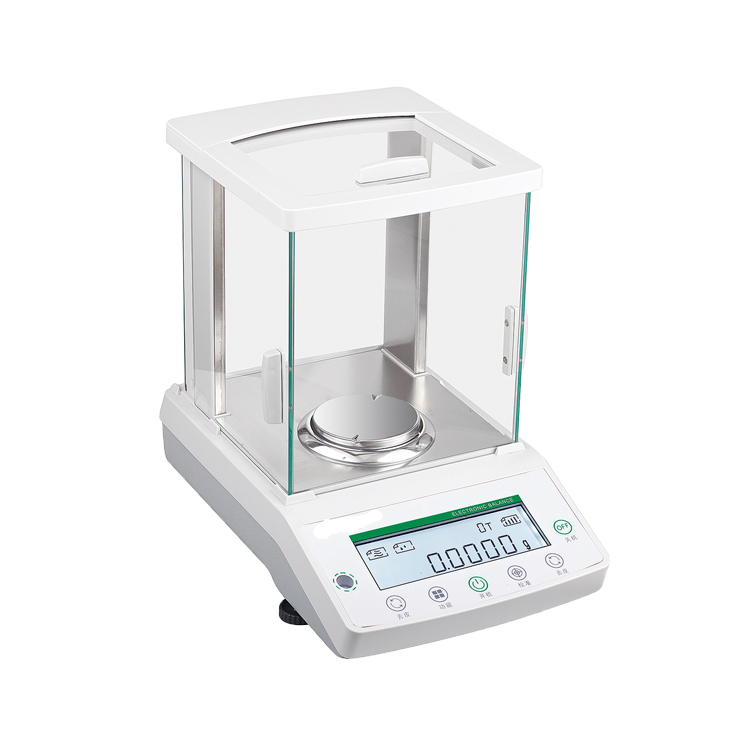
Note: The FA1204N model lets you use both internal and external calibration. This makes it easy to keep your balance accurate and your records correct.
Environmental Controls for Analytical Balance
Things around your balance can change how it works. You need to control these things for the best results.
Environmental Factor | Impact on Performance |
|---|---|
Temperature Fluctuations | Can cause inaccurate measurements |
Air Currents | May change weight readings |
Electromagnetic Interference | Can disrupt electronics |
Humidity | Affects balance and sample stability |
Vibration | Causes unstable measurements |
Static Electricity | Leads to wrong readings |
You can stop these problems by doing a few things: Put the balance on a strong, steady table. Keep the room at the same temperature (within ±2°C). Make sure the air is not too dry or too wet (40-60%). Use a draft shield to block wind. Keep away from things that make electromagnetic interference.
Tip: Let your balance warm up for 30 to 60 minutes before you use it. This helps your readings stay steady.
Data Traceability and Compliance
Traceability means you can follow every measurement back to where it started. This is important for checks and finding mistakes. Digital tools help you show you are following the rules. Good analytical balances help you keep careful records and meet lab standards.
Regulatory Standard | Description |
|---|---|
GMP | Requires proper design and location for intended use |
GLP | Needs documented procedures and staff training |
USP <1058> | Outlines qualification and user requirements |
21 CFR 211.68(b) | Mandates verification of weight calculations |
MHRA Data Integrity | Requires printers to prevent data falsification |
USP <1251> | Provides good practice guides for weighing |
Remember: Good traceability helps you get ready for audits and follow the rules.
Ease of Use and Maintenance
A balance that is easy to use saves time and stops mistakes. Look for features that make your work simple.
Feature | Description |
|---|---|
Efficient Sensors | Fast weighing speeds up your workflow |
Stabilization Time | Short response times help in busy labs |
Optimized Weighing Pan | Improves reproducibility |
Overload Protection | Extends service life |
Easy Cleaning | Keeps the workspace hygienic |
Other good features are a bright screen and a level bubble. These help you read numbers and keep the balance flat. The FA1204N model is made of stainless steel and ABS. This makes it strong and easy to clean.
To stop common problems:
Keep the temperature the same.
Check the level bubble before you start.
Let the balance warm up for 30 to 60 minutes.
Calibrate often, especially after you move it.
Clean the balance a lot to stop damage.
Put things in the center, do not overload, and control static electricity.
Comparing Laboratory Balance Models
When you pick an analytical balance, compare models by important things:
Accuracy and readability
Internal calibration system
User-friendly interface
Static charge elimination
Draft shield design
Pan size
Here is a table to compare the FA1204N and other models:
Feature | FA1204N | Other Leading Models |
|---|---|---|
Readability | 0.1 mg (0.0001 g) | 0.1 mg or lower |
Linearity | ±0.2 mg | Typically ±0.1 mg or better |
Repeatability | ±0.2 mg | Typically ±0.1 mg or better |
Price Range | $1,000 to $10,000 | $1,000 to $30,000 |
Calibration | External and Internal | Varies by model |
Capacity | 100g to 320g | Varies by model |
You can use tools like the Pugh Matrix or cost-benefit analysis to compare. These tools help you look at features, price, and how well the balance works so you can pick the best one.
When picking lab equipment, look at stability, weighing range, and accuracy. Make sure the vendor gives good support and has helpful features. Pick an analytical balance that matches what your lab needs and follows the rules. Use a checklist to help you decide. Ask experts if you are not sure the equipment fits your work.
Feature | Benefit |
|---|---|
Durability | Lasts a long time |
Data traceability | Gives trusted results |
FAQ
What is the difference between 0.1 mg and 0.01 mg balance?
A 0.01 mg balance gives more exact results. It can notice smaller changes than a 0.1 mg balance. Pick the one that fits your experiment best.
How often should you calibrate an analytical balance?
Calibrate your balance every day. Do it again if you move the balance. Calibrate if you see strange numbers. Checking often keeps your results correct.
What makes the FA1204N balance easy to use?
You can finish work faster because it settles quickly. The internal calibration system helps you keep it accurate. Its small size lets it fit in most labs.
Tip: Look at the level bubble before you weigh anything. This helps you get good results.