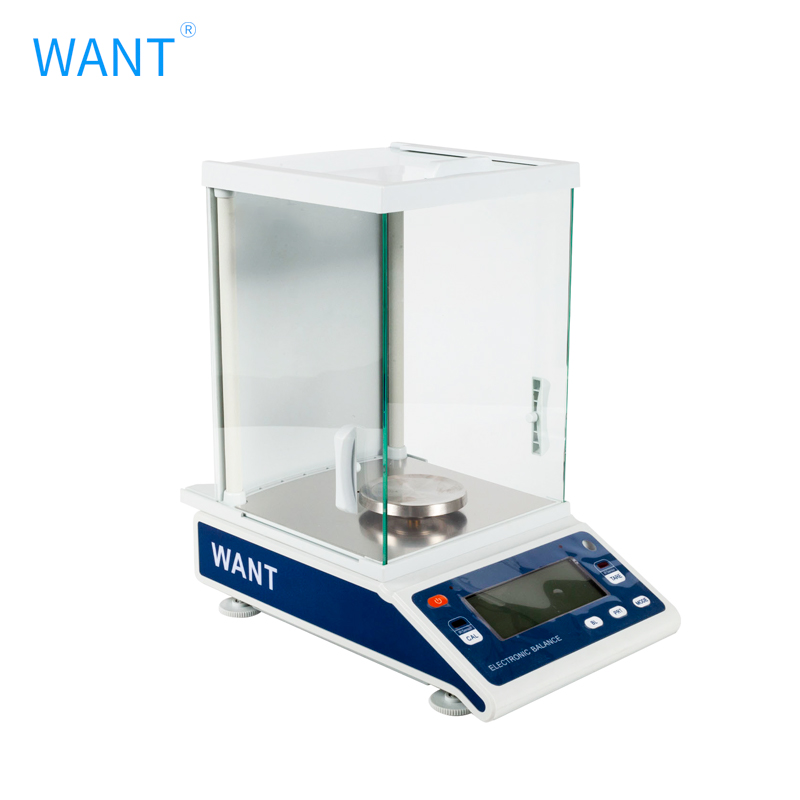
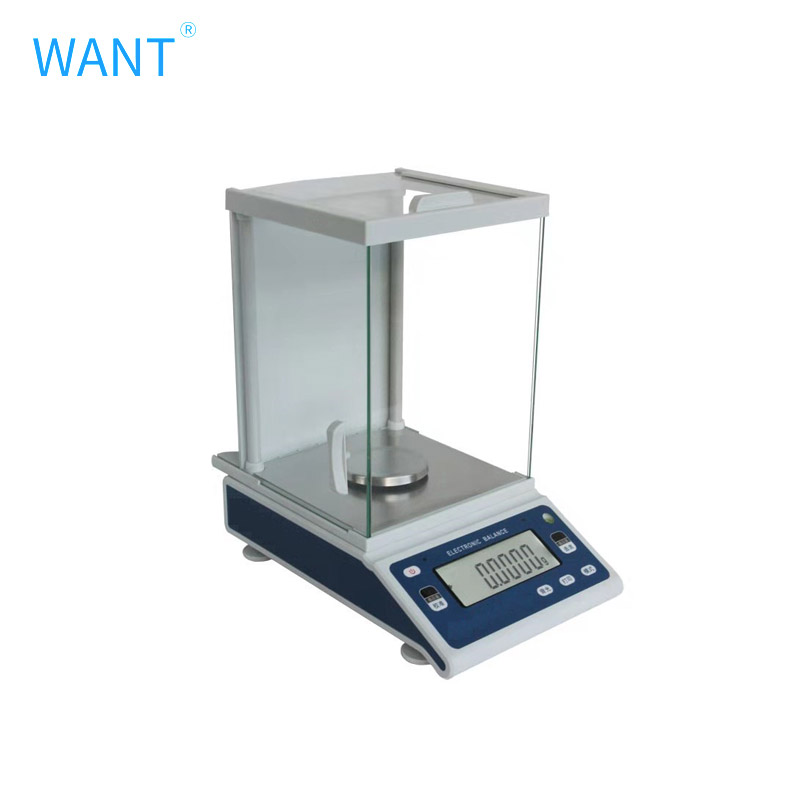
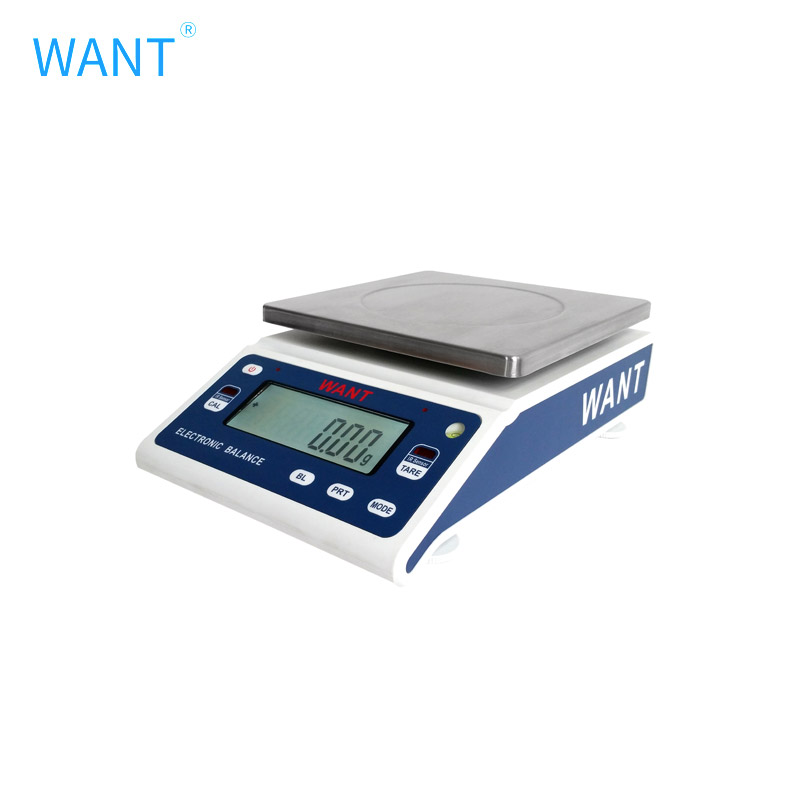
WANT WT-GF 0.1g Electronic Balance – Digital Balance for Laboratory and Chemistry Applications
The WANT WT-GF 0.1g electronic balance is designed for weighing tasks that require practical capacity, clear digital readings, and convenient operation. With available capacities from 6kg to 20kg and a readability of 0.1g, this digital balance is suitable for evaluating routine weighing requirements in laboratories, educational facilities, sample preparation areas, and industrial quality control environments.
Featuring a 200 × 200mm stainless steel weighing pan, a backlit LCD display, and an RS232 interface, the WT-GF supports routine weighing, piece counting, and percentage weighing. It is an option for buyers looking for a digital balance for laboratory workflows involving larger samples, containers, or prepared materials.
0.1g Readability: Displays weight changes in 0.1g increments.
Multiple Capacity Options: Available in 6kg, 8kg, 10kg, 15kg, and 20kg configurations.
Stainless Steel Weighing Pan: A 200 × 200mm platform for routine weighing tasks.
Backlit LCD Display: Supports convenient reading of measurement results.
RS232 Interface: Allows connection to compatible external equipment.
Practical Weighing Functions: Includes counting, percentage weighing, tare, zero tracking, and overload protection.
WT-GF Digital Balance Specifications
When selecting an electronic balance, buyers should compare maximum capacity, readability, pan dimensions, display type, and connectivity. The following table summarizes the published WT-GF series specifications.
| Specification | WT-GF Series |
|---|
| Product Type | Digital Electronic Balance |
| Available Capacity | 6kg, 8kg, 10kg, 15kg, 20kg |
| Readability | 0.1g |
| Weighing Pan Size | 200 × 200mm |
| Pan Material | Stainless Steel 304 |
| Display | LCD with White Backlight |
| Interface | RS232 |
| Weighing Units | g, kg, oz, ct, lb, GN |
| Functions | Counting, Percentage Weighing, Tare, Zero Tracking, Overload Protection |
| Power Supply | AC/DC; rechargeable battery support, subject to configuration |
Note: Confirm the exact model configuration, power supply, interface, and functions with WANT before ordering. Readability is the displayed increment and does not by itself establish measurement accuracy.
Digital Balance for Laboratory Use
Choosing a digital balance for laboratory use requires consideration of sample weight, required readability, measurement tolerance, operating conditions, and the procedure being performed. The correct electronic balance should meet the laboratory's measurement requirements rather than simply offer the highest capacity.
The WT-GF series offers a 0.1g readability and capacities of up to 20kg. This combination may be appropriate for routine laboratory work involving larger samples, containers, prepared materials, or general-purpose weighing when 0.1g readability is sufficient.
Potential Laboratory Applications
Sample Preparation: Weighing bulk materials and prepared samples before further testing.
Educational Laboratories: Supporting routine weighing exercises and laboratory demonstrations.
Material Testing: Measuring the mass of materials and components during preparation.
Quality Control: Performing routine weight checks when the required resolution is compatible with 0.1g readability.
Laboratory Supply: Supporting general-purpose weighing workflows that require a higher capacity.
For analytical procedures that require milligram or sub-milligram readability, consider a more sensitive laboratory balance with performance appropriate to the specific method.
Electronic Scale for Chemistry Applications
An electronic scale for chemistry applications measures the mass of materials used in laboratory preparation, handling, and routine testing. The appropriate instrument depends on sample quantity, required measurement tolerance, and the procedure specified by the laboratory.
For chemistry laboratories handling larger quantities of solid materials, containers, or prepared mixtures, a 0.1g electronic balance may be suitable when the procedure permits this readability. The WANT WT-GF series offers capacity options from 6kg to 20kg for users evaluating higher-capacity weighing equipment.
How to Select an Electronic Balance for Chemistry
Required Readability: Check whether 0.1g increments meet the method's requirements.
Maximum Capacity: Include the weight of containers and accessories when calculating the total load.
Weighing Platform: Confirm that the sample container fits securely on the 200 × 200mm pan.
Operating Environment: Use a stable, level surface and follow the manufacturer's operating instructions.
Data Connectivity: Check RS232 compatibility with the intended computer, software, or external equipment.
For quantitative analytical chemistry, standard preparation requiring very small mass increments, or regulated laboratory procedures, verify the required readability, accuracy, calibration, and applicable certification before selecting a balance.
Key Functions of the WT-GF Electronic Balance
Counting Function
The counting function uses a reference sample to estimate the number of similar items. It can support routine counting of components, consumables, and other uniform parts when the required counting precision is appropriate for the balance.
Percentage Weighing
Percentage weighing compares a measured weight with a reference weight. This function may assist with routine material comparisons and preparation tasks when the balance's performance meets the required tolerance.
Tare and Zero Tracking
The tare function allows users to exclude the weight of a container from the displayed net weight. Zero tracking helps maintain a zero indication under appropriate operating conditions.
Overload Protection
Overload protection helps protect the weighing system against excessive loads. Users should still observe the maximum capacity specified for the selected model.
RS232 Connectivity
The WT-GF series lists an RS232 interface for connection to compatible equipment. Confirm communication settings, cables, and software compatibility before integrating the balance into a laboratory data collection system.
How to Choose the Right Digital Balance for Laboratory Work
1. Determine the Required Capacity
Calculate the heaviest sample and container combination. Choose a model that accommodates the total load without exceeding its rated capacity.
2. Match Readability to Your Procedure
A 0.1g digital balance displays weight in 0.1g increments. If the procedure requires finer increments, consider a 0.01g or 0.001g balance with an appropriate capacity and verified performance.
3. Check the Pan Dimensions
The WT-GF series has a 200 × 200mm weighing pan. Ensure that your sample containers fit within the platform and can be positioned securely.
4. Review the Operating Environment
A stable, level surface and suitable environmental conditions help support consistent weighing. Follow the product manual for setup, cleaning, and operation.
5. Confirm Connectivity Requirements
If measurement data must be transferred to a computer or external system, verify that the RS232 interface and communication settings meet your requirements.
6. Verify Application Suitability
For routine weighing, education, and larger-sample preparation, the WT-GF may be appropriate when 0.1g readability is sufficient. For high-precision analytical procedures, verify the required performance and calibration requirements before purchase.
A digital balance is an electronic weighing instrument that displays measurement results digitally. Depending on the model, it may offer tare, counting, unit conversion, and data connectivity functions.
The WT-GF may suit routine laboratory weighing involving larger samples or containers when 0.1g readability meets the procedure's requirements. It should not automatically be treated as an analytical balance for applications requiring finer readability or specialized measurement performance.
Yes. An electronic balance can be used to weigh chemicals, prepare materials, and perform routine laboratory tasks when its capacity, readability, and performance meet the procedure's requirements. High-precision analytical work may require a more sensitive instrument.
Readability is the smallest displayed increment, while accuracy describes how closely a measurement agrees with the true or accepted value. A balance with 0.1g readability does not necessarily have an accuracy of ±0.1g.
The published WT-GF specifications list an RS232 interface. Confirm compatibility with your computer, software, or other external equipment before integration.
A 0.1g balance displays increments of 0.1g, while a 0.01g balance displays finer increments of 0.01g. The appropriate choice depends on the required readability, sample weight, capacity, and measurement procedure.
The published WT-GF series information lists 6kg, 8kg, 10kg, 15kg, and 20kg capacity options with 0.1g readability. Confirm current availability and exact model specifications with WANT before ordering.