


Analytical Balance vs Electronic Balance: Key Differences and How to Choose
 Nov 24, 2026|
 View:11
Selecting a laboratory balance often begins with a confusing pair of terms. An Electronic Balance can describe almost any digital weighing instrument, while an Analytical Balance refers to a narrower class built for sub milligram work. This guide compares the two across measuring principle, readability, capacity, environmental demands and typical applications, so that readers can match the instrument to the sample mass and the tolerance the method requires.
Key Takeaways
The broader product family covers general weighing, while the analytical class is the high precision branch within it.
Readability is the main divider: about 0.1 mg for analytical work versus 1 mg to 1 g for most general models.
Force compensation sensing and an enclosed draft shield let precision instruments resolve very small mass changes.
Selection should follow the smallest routine sample and the method tolerance, not maximum capacity alone.
Electronic Balance and Analytical Balance: How the Categories Relate
The two terms are often treated as synonyms, yet they sit at different levels of the same instrument family. An Electronic Balance product category covers any weighing device that converts an applied load into an electrical signal and reports mass as a digital value. That definition includes bench models, precision units, counting scales and platform instruments. The analytical class is one member of this family, engineered for the smallest samples and the finest display increments available in routine laboratory work.
The hierarchy matters when specifications are compared. A laboratory weighing reagents in gram quantities may find a precision instrument sufficient, while quantitative analysis at four decimal places calls for a dedicated analytical model. General background on how enclosed weighing chambers and readability classes define precision instruments explains how the enclosed weighing chamber became the defining physical feature of the analytical class.
What Is an Electronic Balance?
At its core, a digital weighing instrument replaces the mechanical lever and pointer with a sensor and a digital readout. In many general purpose models a strain gauge load cell flexes slightly under load, and the resulting change in electrical resistance is converted into a mass value. Higher capacity units favour this design because it tolerates heavier loads and less controlled surroundings. Readability across the category spans roughly 1 mg to 1 g or more, while capacity ranges from a few hundred grams to tens of kilograms.
What Is an Analytical Balance?
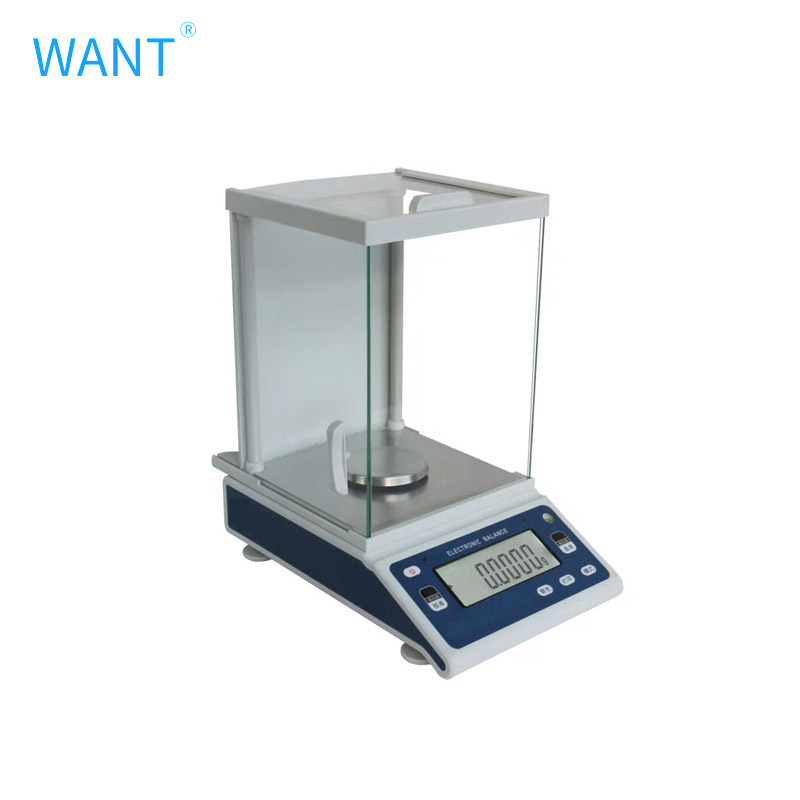
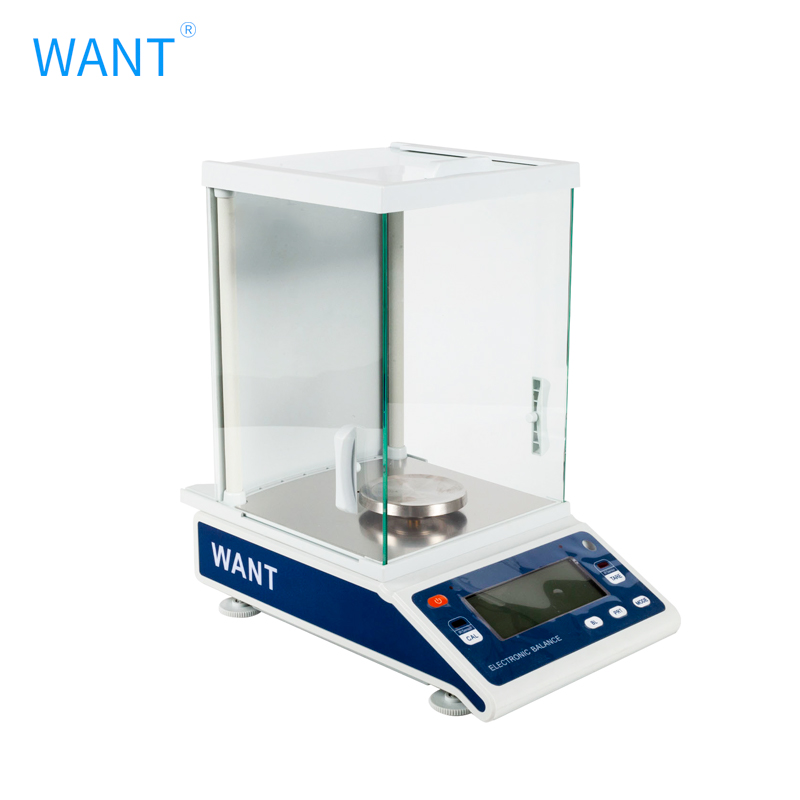
An Analytical Balance is built to resolve mass changes at the 0.1 mg level or finer. Most instruments in this class use electromagnetic force compensation: a coil suspended in a magnetic field generates an opposing force that keeps the pan close to its rest position, and the current required to hold that position is proportional to the load. A description of the force compensation principle used in precision weighing shows why the design limits the mechanical motion that constrained older balances. Because the reading responds to very small forces, the pan sits inside a transparent glass draft shield.
Key Differences Between an Analytical Balance and an Electronic Balance
The practical distinctions reduce to four variables: readability, capacity, sensing method and installation demands. Readability is the smallest increment the display can show. Analytical instruments normally display 0.0001 g, whereas a general purpose model may display 0.001 g, 0.01 g or 1 g depending on the model. Capacity tends to move in the opposite direction; an instrument resolving 0.1 mg typically holds a few hundred grams, while a 30 kg platform unit may resolve only 1 g.
Installation is a further dividing line. Sub milligram readings respond to air movement, vibration, temperature drift, static charge and even fingerprints on glassware. Such an instrument is therefore set on a heavy, level bench away from doors and ventilation outlets, with the shield closed while a value is read. Routine weighing on a precision model is more forgiving, although levelling and clean sample containers still matter. National requirements for weighing device specifications and tolerances set out how instruments are evaluated against stated performance limits.
Compare Balance Options for a Laboratory
Review published specifications and application notes to match a weighing instrument to the required sample mass and tolerance.
Analytical Balance and Electronic Balance Specifications Compared
Published specifications are the clearest way to see where a model sits. The table below combines industry wide readability ranges with examples taken from manufacturer published product pages. Values labelled as manufacturer data apply to the listed models only and should not be treated as universal requirements.
Two representative instruments illustrate the span of the category, from a 0.1 mg analytical model to a 30 kg digital unit.
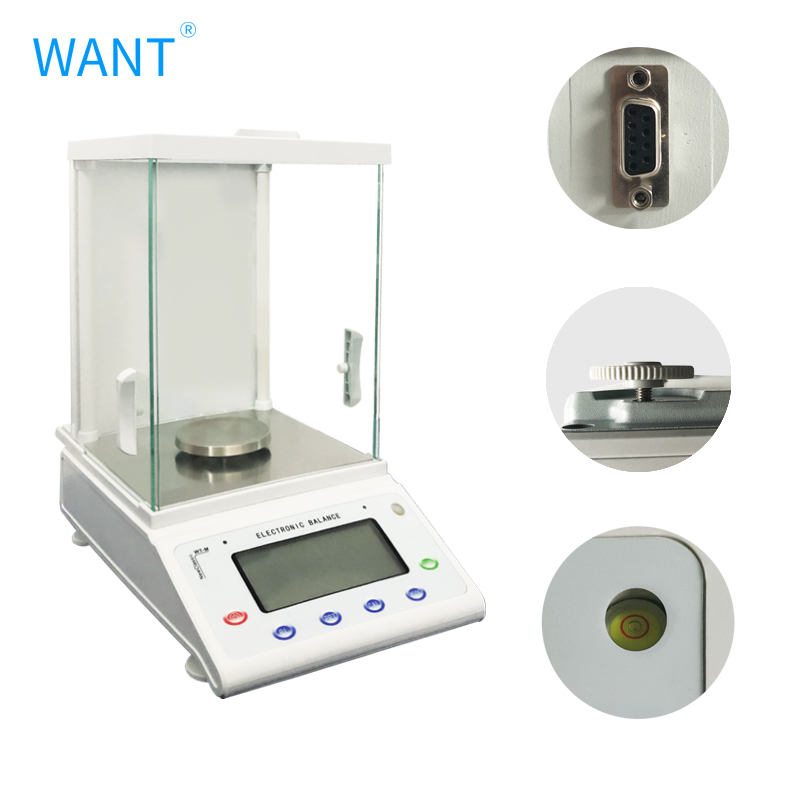
FA Series Electromagnetic 0.1mg Analytical Balance
Electromagnetic force balance with 0.1 mg readability, 60 g to 220 g capacities, a glass draft shield and an RS232C interface.
View Product
WT-B 30000g 1g Digital Electronic Balance
30 kg capacity unit with 1 g readability, counting and tare functions, a stainless platform and an optional RS232 interface.
View Product| Parameter | Analytical Balance | Electronic Balance | Data basis |
|---|---|---|---|
| Readability | 0.1 mg (0.0001 g) typical; semi micro 0.01 mg | 1 mg to 1 g, model dependent | Industry general ranges |
| Typical capacity | 60 g to 320 g | 100 g to 30 kg or more | Industry general ranges |
| Sensing method | Electromagnetic force compensation | Strain gauge load cell or force compensation | General technical references |
| Draft shield | Enclosed glass chamber, standard | Open pan on most models | General technical references |
| Example model | FA series, 0.1 mg, 60 g to 220 g | WT-B, 1 g, 30 kg | Manufacturer published data |
The figures show that analytical instruments trade capacity for resolution, while larger models do the reverse. Neither type is inherently more accurate for every task; suitability depends on whether the method tolerance is met at the sample mass being weighed. Repeatability, often reported as a standard deviation, is a more useful indicator of real performance than the number of decimal places on the display. A guide to calibration and routine maintenance describes how certified weights and daily checks help preserve that performance over time.
Request Specifications and Calibration Guidance
Obtain model data, calibration guidance and application notes for analytical and routine weighing tasks.
Conclusion
An Electronic Balance names the full family of digital weighing instruments, and the analytical class is its high precision branch. The decision is governed by the smallest sample and the tolerance the method allows: four decimal place work needs the force compensation and draft shield of an analytical instrument, while gram scale routine weighing is usually served by a precision model with a larger capacity. Matching readability to the task avoids both wasted resolution and unacceptable weighing error.
FAQ
Is an Analytical Balance the same as an Electronic Balance?
No. The analytical class is a high precision subclass designed for sub milligram readings. The wider category also includes precision and top pan models with coarser readability and larger capacity.
What readability is required for quantitative analytical work?
A standard instrument of this class typically reads to 0.1 mg, which is 0.0001 g. Semi micro models reach 0.01 mg. The smallest reliable sample also depends on repeatability and the tolerance stated in the method.
Why is a draft shield needed at sub milligram resolution?
At 0.1 mg resolution, air currents from doors or ventilation can shift the displayed value. The enclosed glass shield limits those drafts, and a level, vibration free surface further stabilises the reading.
Can a general purpose model replace an analytical instrument for routine weighing?
For routine weighing of gram sized samples, a precision model with 1 mg or 0.01 g readability is often sufficient. Methods requiring four decimal places in grams call for an analytical instrument.
How often should precision weighing instruments be calibrated?
The interval depends on usage, surroundings and quality requirements. Many laboratories run a routine check with a certified weight daily and schedule formal calibration at defined intervals.