




What is Electromagnetic Balance and How Does It Work
 Jun 12, 2026|
 View:632
You use an electromagnetic balance when you need very exact measurements. This device uses electromagnetic force to measure weight very carefully. You can trust the results because the electromagnetic balance lowers mistakes from shaking, moving air, and changes in temperature. See how it compares:
Feature | Traditional Weighing Methods | Electromagnetic Balance |
|---|---|---|
Accuracy | Can have mistakes | Very exact and dependable |
Environmental Influence | Easily changed | Blocks and fixes problems |
Measurement Efficiency | Slow | Fast and works well |
With an electromagnetic balance, you get results that are quick and trustworthy every time.
Key Takeaways
Electromagnetic balances give very exact measurements. This makes them important for careful work in labs and factories.
These balances work fast. You get results in just a few seconds. This helps save time during tests and making things.
The technology adjusts for things like moving air and heat. This helps keep the readings steady and correct.
Using an electromagnetic balance is easy. Just put your sample on the pan. Then look at the digital screen for quick results.
To get the best results, keep the balance clean and flat. Also, keep it away from wind or shaking.
Electromagnetic Balance Overview
Definition and Function
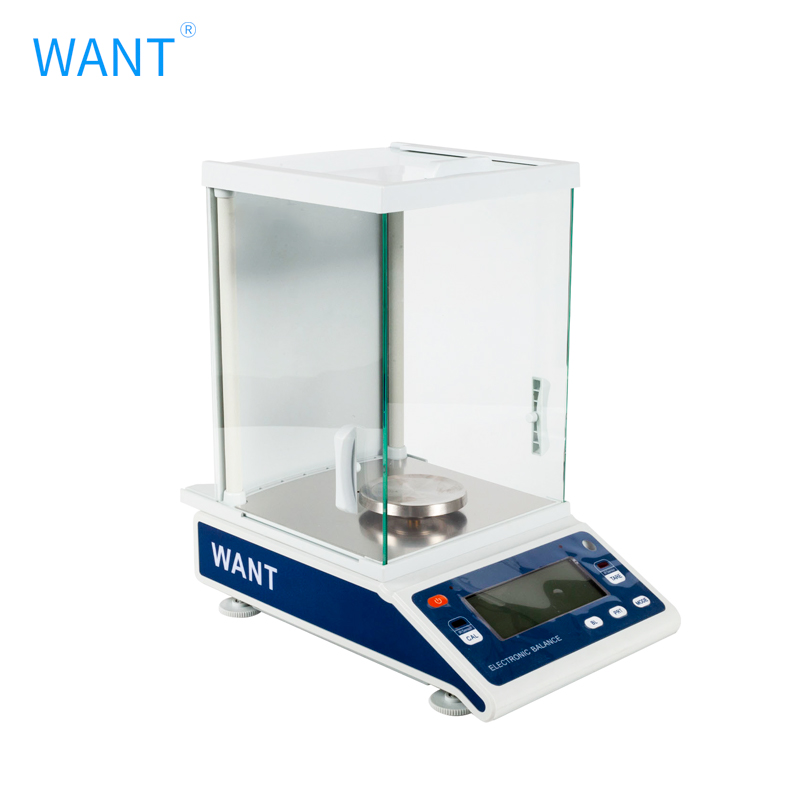
An electromagnetic balance helps you measure very small things. It is used when you need to be very exact. The device uses electromagnetic force compensation. Inside, there is a coil that makes a magnetic field. When you put something on the balance, the system changes the electric current in the coil. This change makes a magnetic force that matches the object's weight. The balance figures out the weight by checking how much current is needed to keep the object steady.
This way, you get results that are both correct and dependable. You can believe the numbers because the balance works fast. It does not let things like moving air or temperature changes mess up the measurement. This technology lets you be very precise in your work.
Tip: If you want to measure powders, liquids, or tiny samples, an electronic balance gives you the best results.
Importance in Precision Weighing
People use electromagnetic balances in places where being exact is important. In labs, you use them to:
Get correct and exact weights for experiments.
Work faster because the balance gives quick results.
Weigh many things, like powders and liquids.
Many jobs need this technology every day. Here is a table that shows where you might use an electromagnetic balance:
Industry | Application |
|---|---|
Chemistry | Accurate weighing of reagents and samples for experiments and analysis. |
Pharmaceutical Industry | Precise measurement of active ingredients and quality control of medication dosages. |
Biology and Biotechnology | Weighing samples and preparing media for biological research and bioprocessing. |
Environmental Science | Weighing samples for monitoring pollutants and contaminants in environmental studies. |
Jewelry and Precious Metals | Measuring weight of gemstones and precious metals for valuation and transactions. |
You count on electronic balances for their exactness and trustworthiness. These devices help you make sure every measurement is right. This is important for science, industry, and jewelry. When you need to trust your results, you pick an electromagnetic balance.
How Electromagnetic Balance Works
Working Principle
An electromagnetic balance helps you measure small things accurately. It does not measure mass right away. It checks the force your sample puts on the pan. The balance turns this force into an electrical signal. You see the result as a number on the screen.
Here are the steps you follow:
Put your sample on the pan. The sample pushes down.
The load cell feels the force from the sample.
The load cell changes the force into an electric signal.
The sensor reads the signal and shows a number.
The control unit checks the number and compares it to a set value.
The balance uses a feedback loop to keep the pan steady.
The electromagnetic coil makes a magnetic field. This field balances the sample’s weight.
The balance measures the electric current needed to keep the pan level.
The system uses this current to figure out the mass of your sample.
Tip: You can trust this method because the balance uses reference weights to check itself. This makes sure you get correct results every time.
Electromagnetic Force Mechanism
The electromagnetic force mechanism is the main part of the balance. When you add a sample, the balance makes a force that matches the sample’s weight. The current needed for this force tells you the exact mass. This method gives you quick and accurate results.
You can see this technology in the FA Series Electromagnetic 0.1mg Analytical Balance from WANT Balance Instrument Co., Ltd. This balance uses a special sensor to get accurate measurements. It can measure samples as small as 0.1mg. This is great for jobs that need high precision.
Here are some features of the FA Series:
Specification | Details |
|---|---|
Series | FA Series |
Maximum Capacity | 120 g / 200 g / 220 g (model dependent) |
Readability / Resolution | 0.0001 g (0.1 mg) |
Repeatability | ±0.0002 g |
Linearity Error | ±0.0003 g |
Display | LCD Backlit Digital Display |
Weighing Technology | Electromagnetic Force Restoration Sensor |
Calibration | Internal / External Calibration |
Weighing Units | g, mg, ct, oz, gn, dwt |
Stabilization Time | ≤ 3 seconds |
Weighing Pan Material | Stainless Steel |
Pan Size | Approx. 80 – 90 mm diameter |
Draft Shield | Glass enclosure with sliding doors |
Operating Temperature | 10°C – 30°C |
Power Supply | AC Power Adapter |
Housing Material | Metal base with strong ABS / Aluminum body |
Dimensions | Approx. 300 × 200 × 300 mm |
Net Weight | Approx. 5 – 7 kg |
You can use this balance for many kinds of samples. The glass cover keeps your sample safe from moving air. The digital screen shows your measurement clearly. The balance works fast, so you get results in seconds. You can trust this technology for labs and industry.
When you need to be exact, the electromagnetic balance is your best choice. You can measure powders, liquids, or tiny solids with confidence. The balance’s design and technology help you get correct and reliable measurements every time.
Components of Electronic Balance
Main Parts
When you use an electronic balance, you work with several key parts. Each part helps you get accurate results. Every part has its own job to make sure your measurements are correct.
Weighing Pan: You put your sample on this flat surface. Most pans are made of stainless steel. This keeps them clean and stops reactions with your sample.
Load Cell: This part feels the force from your sample. It turns the force into an electrical signal.
Sensor: The sensor reads the signal from the load cell. It changes the signal into a digital value you can see.
Electromagnetic Coil and Magnet: These parts make a magnetic field. The coil adjusts the force to balance your sample. The magnet helps keep the balance steady.
Display: The display shows the weight of your sample. Most balances use a digital screen. You can read the numbers easily.
Microprocessor and Control Unit: This part is like the brain of the balance. It handles the data, controls the display, and manages extra features.
Note: The enclosure is often made of glass or strong plastic. It protects your sample from air movement and dust. This keeps your results accurate.
Interaction of Components
The parts of a digital balance work together to give you fast and reliable measurements. Here is how they interact:
The weighing pan holds your sample.
The load cell senses the weight and sends a signal to the sensor.
The sensor turns this signal into a digital value.
The electromagnetic coil makes a magnetic field. It balances the force from your sample by adjusting the current.
The magnet works with the coil to keep the pan level.
The microprocessor gets the digital value and shows the result on the display.
Modern electronic balances have smart features that make your work easier. You can see some of these features in the table below:
Feature | Description |
|---|---|
Automatic Calibration | The balance adjusts itself to stay accurate. This saves you time and reduces mistakes. |
Error Correction | The balance can fix small errors. It recalibrates itself with built-in weights or algorithms. |
Tare Function | You can reset the display to zero. This lets you only measure the weight of your sample. |
You use an electronic balance in labs, schools, and factories. This tool helps you measure even the smallest sample with confidence. The digital balance gives you clear results, so you can trust your measurements every time.
Kibble Balance and Related Technologies
Kibble Balance Explained
The kibble balance is a tool that changes how we measure mass. People also call it the watt balance. It uses electromagnetism and Faraday's law of induction. With the kibble balance, you compare mechanical power to electrical power. The watt balance measures current and voltage in a coil. These measurements are linked to mechanical power. The kibble balance works in two different modes. In weighing mode, you put a test mass on the balance. The mass pushes down, and the coil makes an upward force. You measure the current needed to keep the mass balanced. In velocity mode, you move the coil through a magnetic field. This movement creates a voltage. You measure this voltage to find out the field strength.
The kibble balance does not use a physical object as a standard. Instead, it connects to important constants in science. The watt balance helps you measure the Planck constant. Scientists use the kibble balance to redefine the kilogram. The kibble balance is very important for science. The watt balance gives very exact results. You can get measurement uncertainty as low as 1×10⁻⁸. Tsinghua University has small kibble balance designs. These designs make it easier to calibrate mass. A compact kibble balance is easy to use and saves money. The kibble balance has a special magnet system, a custom weighing unit, and a steady dual-stage current source. You can calibrate masses from 10 g to 1 kg with less than 50 μg of uncertainty.
Advancement Description | Details |
|---|---|
Tabletop Kibble Balance | Made at Tsinghua University to improve measurement precision and make mass calibration easier. |
Measurement Uncertainty | Can reach a best relative measurement uncertainty of 1×10⁻⁸. |
Compact Design | Aims to be easy to use and not expensive. |
Key Components | Has a new magnet system, a custom weighing unit, and a steady dual-stage current source. |
Mass Calibration Range | Can calibrate masses from 10 g to 1 kg with uncertainty below 50 μg. |
Note: The kibble balance lets you measure mass with very high accuracy. People use it for science research and national standards.
Comparison with Electromagnetic Balance
There are some differences between the kibble balance and the electromagnetic balance. The kibble balance compares mechanical power to electrical power. The watt balance uses electromagnetism and measures current and voltage. The kibble balance works in weighing and velocity modes. The electromagnetic balance measures weight right away using electromagnetic forces. You use the electromagnetic balance for quick and direct measurements. The kibble balance links mass to important science constants. The electromagnetic balance uses reference weights and physical objects.
You use the kibble balance to help redefine the kilogram. The watt balance measures the Planck constant. The kibble balance is used in national labs. The electromagnetic balance is good for labs, schools, and factories. You pick the kibble balance when you need the highest precision. You use the electromagnetic balance for everyday weighing.
Tip: Use the kibble balance when you need to link mass to universal constants. Use the electromagnetic balance for normal measurements.
The kibble balance and watt balance are advanced tools. The electromagnetic balance is practical and dependable. Both balances help you get accurate results in science and industry.
Weighing Applications
Laboratory and Industrial Uses
Electronic balance tools are found in labs and factories. These devices help you measure many kinds of samples. You need them for exact weighing in research and production. Here are some ways people use them:
Chemistry: You weigh reagents and samples for experiments.
Pharmaceutical Industry: You check ingredients and medicine dosages.
Biology and Biotechnology: You weigh samples and prepare media.
Environmental Science: You weigh samples to study pollution.
Jewelry and Precious Metals: You measure gemstones and metals.
Precision balances help you get the most accurate results. The FA Series from WANT Balance Instrument Co., Ltd. has special features. You can weigh tiny samples and get fast results. The glass cover keeps air away from your sample. This helps you get correct readings every time.
Tip: In labs, you must follow strict steps. Using a precision balance stops mistakes and keeps your data safe.
Everyday Applications
Electronic balances are used outside labs too. In schools, you weigh samples for science class. Teachers show students how to measure mass and be precise. In factories, you check product weight for quality. In food production, you weigh ingredients to keep recipes the same.
At home, you might use a small balance for jewelry or coins. You can measure powders or liquids for baking or crafts. These tools help you learn about measuring and being accurate.
Application Area | Example Use |
|---|---|
Education | Science experiments, teaching |
Manufacturing | Product quality checks |
Food Production | Ingredient weighing |
Home | Jewelry, coins, hobby samples |
Weighing technology helps in many places. You get exact results in labs or at home. Accurate measurements help you make good choices and do better work.
Pros and Cons
Benefits
There are many good things about using an electromagnetic balance. This tool helps you measure small items with great accuracy. You can trust the results because the balance gives the same answer each time. Here are some main benefits:
High Accuracy: You can measure tiny samples and get correct numbers.
Fast Results: The balance shows the weight quickly, so you do not wait long.
Easy to Use: You just put your sample on the pan and read the screen.
Stable Measurements: The balance stops air movement and temperature from changing your results.
Versatile Applications: You can use it in labs, factories, schools, and at home.
Tip: If you want better science experiments, pick a balance with high accuracy. This helps you get better data.
Benefit | What It Means for You |
|---|---|
High Accuracy | Trust your results every time |
Fast Results | Save time in your work |
Easy to Use | No special training needed |
Stable Measurements | Less chance of mistakes |
Versatile Use | One tool for many jobs |
Limitations
There are some limits to electromagnetic balances. These tools work best in certain places. Here are a few things to remember:
Sensitive to Environment: Strong shaking or drafts can change the balance.
Needs Careful Handling: You must keep the balance clean and level for best results.
Power Supply Needed: The balance needs electricity to work.
Cost: High-precision balances can cost more than basic scales.
Note: Always use your balance on a steady table and away from open windows. This helps you get the most accurate results.
You get the best results by following setup tips and using the balance the right way.
Electromagnetic balance helps you weigh things very exactly. It uses electromagnetic force, not regular weights. The balance checks how much electric current is needed to keep the pan still. This current changes when you add or take away weight. You find out the mass by looking at the current when the pan does not move.
Electromagnetic balance gives you results you can trust in science, factories, and schools. You can count on this tool for every important measurement.
FAQ
What is the main advantage of using an electromagnetic balance?
You get results that are both quick and accurate. The balance uses electromagnetic force to check weight. This way, mistakes from moving air or temperature changes are less likely.
How do you keep your electromagnetic balance accurate?
Put your balance on a flat and steady table. Keep it clean and make sure there is no dust. If your balance has automatic calibration, use it to help stay accurate.
Can you use an electromagnetic balance for liquids?
Yes, you can use it for liquids. Put a container on the pan and press tare to set the weight to zero. Then add your liquid. The balance will show just the weight of the liquid.
What does the tare function do?
The tare function makes the display go back to zero. You can take away the weight of a container or paper. This lets you measure only your sample.
Recommended Products

micro analytical balance 200g 51g 0.01mg 0.1mg Double range
FA1004N 0.0001g 0.1mg 100g digital laboratory balance scale
WANT ES 0.01mg Analytical balance

FA5204X(N) 520g/0.1mg Electronic Balance
FA3204N 0.0001g 0.1mg 320g Digital laboratory balance scale
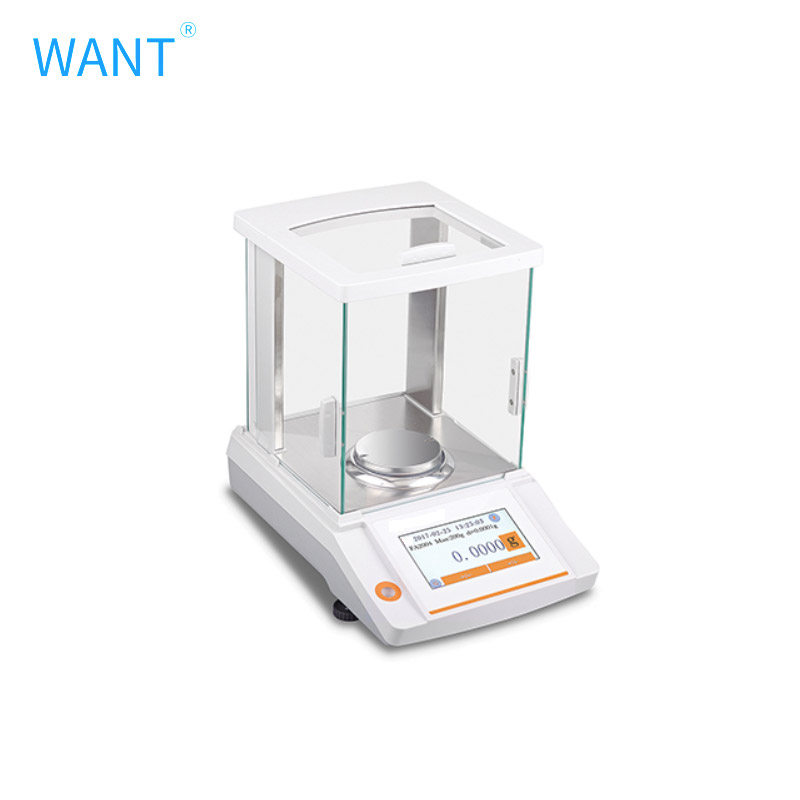
WANT FA 0.1mg Touch screen type
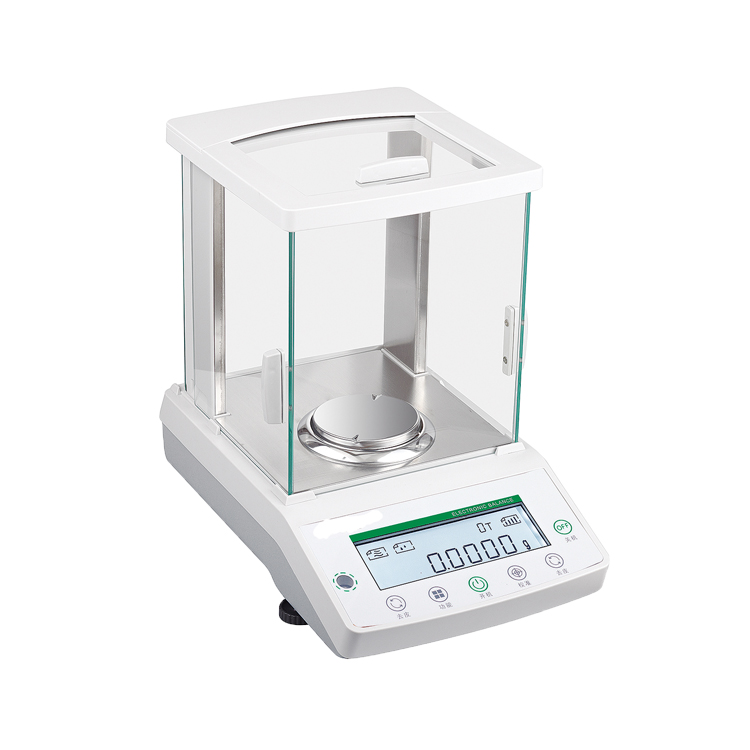
FA1204N 0.0001g 0.1mg 120g Digital laboratory balance scale
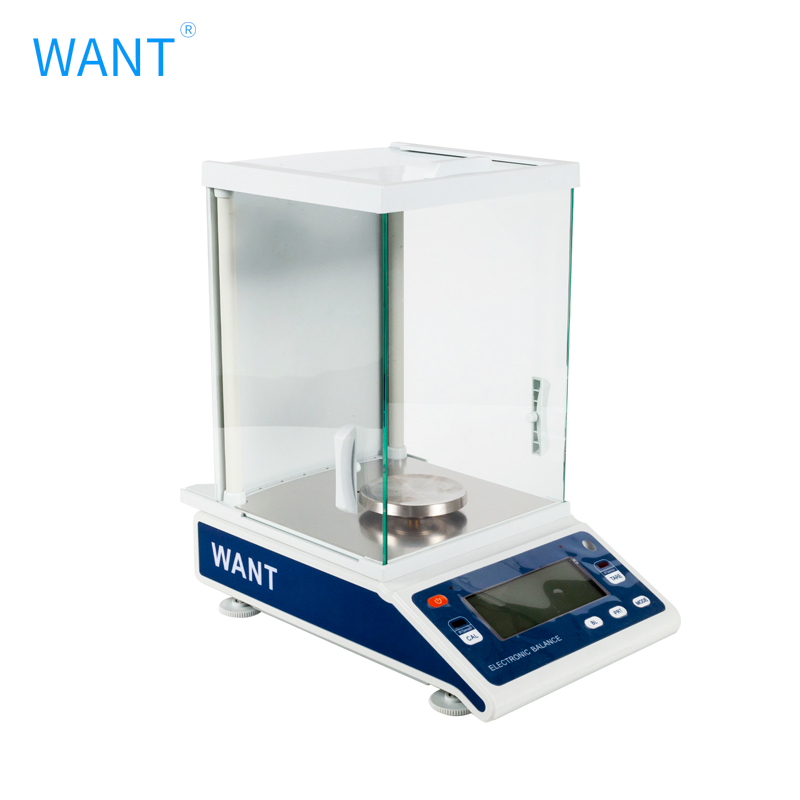
FA Series Electromagnetic 0.1mg Analytical Balance
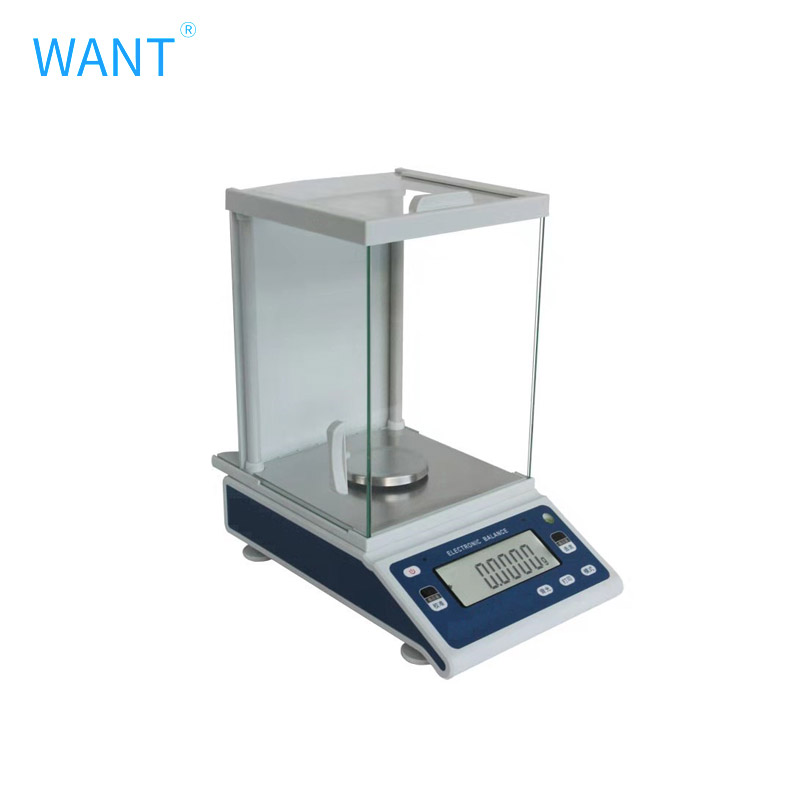
WANT FA 0.1mg Switch panel type Analytical balance


Recent News
1.Top 10 Digital Balance Manufacturers in China 2026
2026-06-042.What is an Electronic Weighing Balance and How Does It Work
2026-06-013.What is a digital analytical balance and how does it work
2026-05-284.What is 0.0001g Analytical Balance?
2026-05-145.How Precision Balances and Analytical Balances Differ in Laboratory Settings
2026-04-306.What is an Electronic Scale Used for in Chemistry?
2026-04-107.Electronic Balance Manufacturers You Can Trust for Labs
2026-03-238.How to Select the 0.0001 mg Analytical Balance for Your Laboratory
2026-03-199.How to Choose the Right Electronic Scale Balance for Your Laboratory
2026-03-1010.Top 7 Electronic Balance Suppliers for Laboratories in 2026
2026-02-26